
Bitcoin Surges 7%, Is the "Digital Gold" Narrative Back?


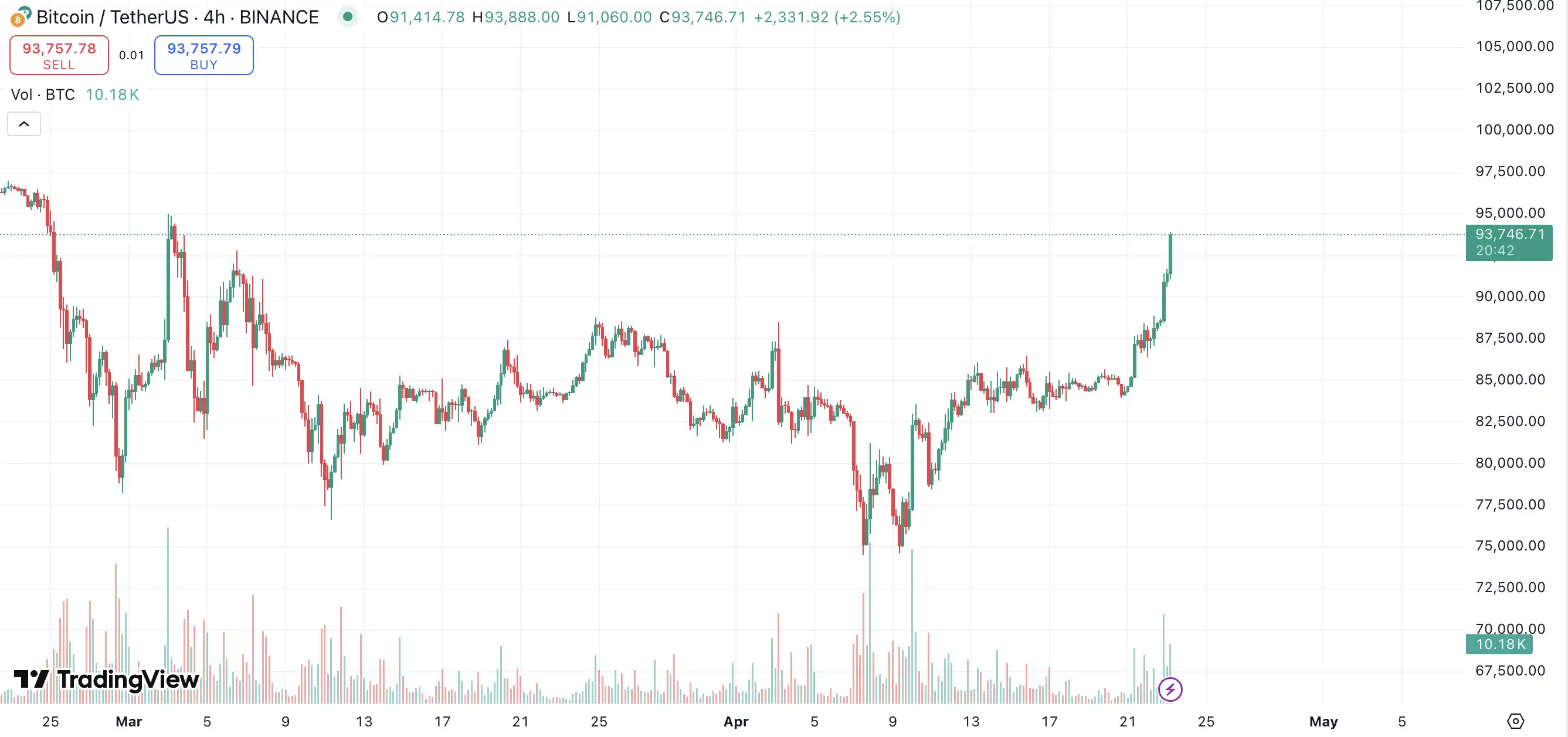
Waking up to a surge in Bitcoin price to over $93,000 driven by optimism in the improvement of US-China trade relations, with a 24-hour gain of over 7%. However, according to a report by CryptoQuant, on-chain data shows that the market fundamentals still exhibit vulnerability, and BTC is facing a key resistance level.
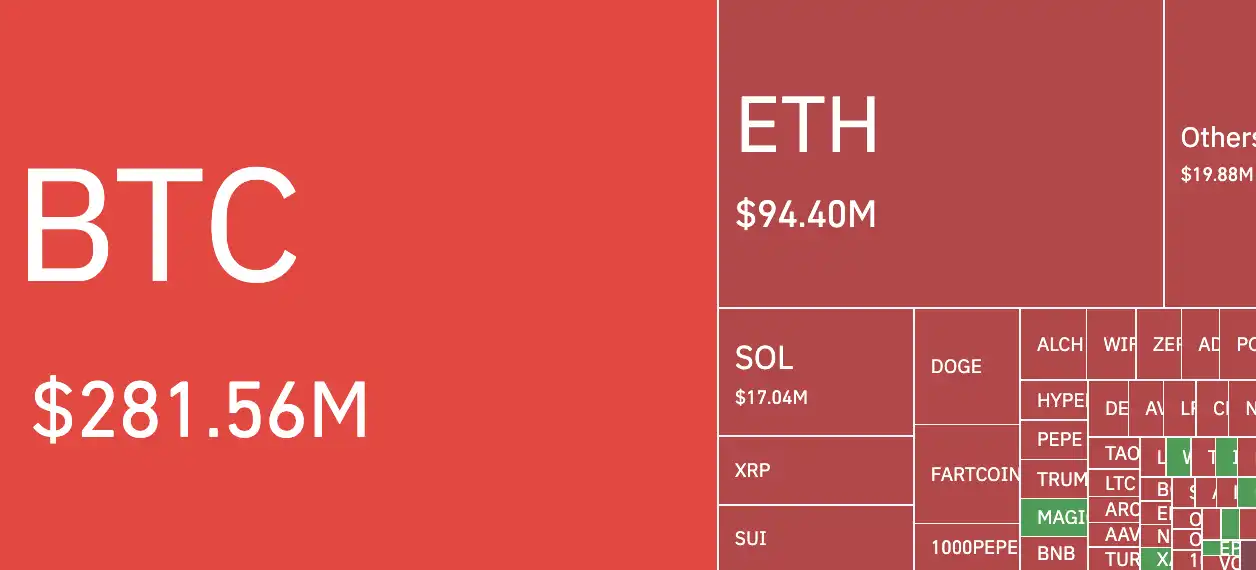
According to Coinglass data, there have been $490 million in liquidations across the network in the past 12 hours, with $450 million in short liquidations.
Meanwhile, gold saw a significant pullback from its intraday high of $3,500, dropping by 1%. The world's largest gold ETF--SPDR Gold Trust--saw a reduction of 11.47 tons in holdings compared to the previous day, with current holdings at 947.70 tons.
This rally is not merely a short-term reaction to the warming of US-China trade relations but more like a risk repricing under multiple macro signals. In this storm of policy maneuvering and safe-haven demand, Bitcoin is once again seen as a capital "safe harbor," with its price surge possibly being a preemptive response to future inflation, US dollar credit, and global geopolitical shifts.
Is Tariff Reversal Sustainable?
The primary reason for Bitcoin's recent surge is attributed to the Trump administration's shift in tariff policy.
Yesterday, US Treasury Secretary Benson, in a closed-door meeting at JPMorgan, told investors that the current tariff standoff with China is unsustainable. He expects a "thaw" to occur "in the near future" and described the current situation as a "trade embargo." However, he also warned that reaching a more comprehensive agreement between the US and China may still take several years.
Subsequently, President Trump stated to the media at the White House that the US tariffs on China "will be significantly reduced from the current 145% level," easing concerns of further escalation in the trade war.
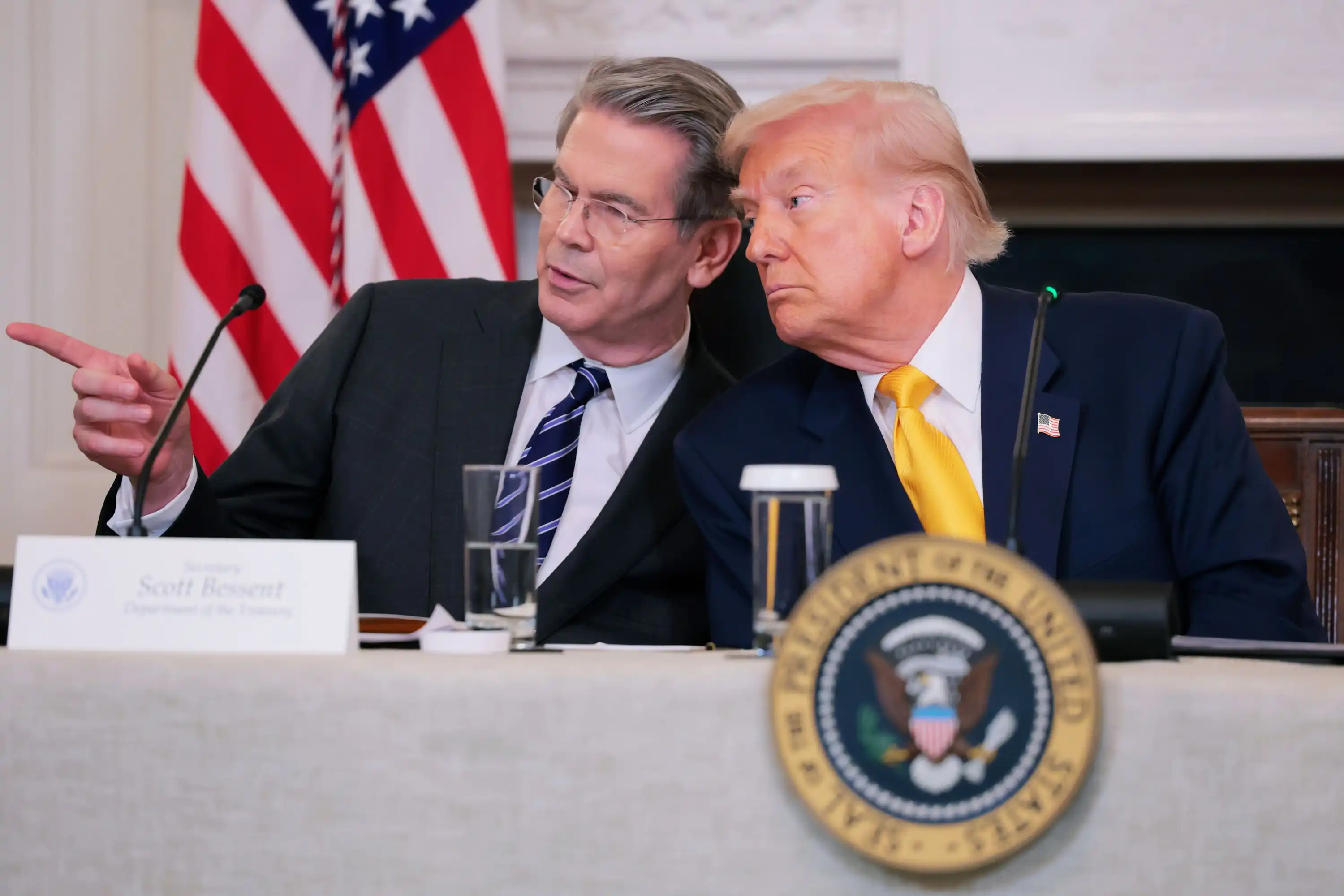
Currently, the Trump administration has engaged in trade negotiations with Japan, India, South Korea, the EU, Canada, Mexico, and other countries. White House Press Secretary Caroline Levitt stated that the Trump administration has received 18 trade agreement proposals from other countries and added, "All parties involved want to see a trade agreement reached."
However, despite this, Trump has not publicly indicated intentions to repeal the "10% base tariff" he has set. He continues to insist that other countries should lower their own import duties and eliminate various non-tariff barriers, which the US views as hindrances to American exports.
Bitcoin Decoupling from Traditional Finance
According to the International Monetary Fund's (IMF) April 2025 World Economic Outlook report, the U.S. economic growth forecast for this year has been revised down to 1.8% from 2.7%, and the inflation outlook has been raised from 1.9% to 3%. The report also predicts a broader global economic slowdown. Less than an hour after the report was released, Bitcoin surged to its highest level in seven weeks, breaking the $90,000 mark.
Some analysts have pointed out that Bitcoin's recent performance supports the view that it is decoupling from the trends of traditional finance and tech stocks. Patrick Liou, Vice President of Institutional Sales at Gemini, stated that Bitcoin's modest "deviation" reflects investors' cautious stance in the face of U.S. political and macroeconomic risks, especially President Trump's recent criticism of the Federal Reserve's monetary policy and the progress of post-war trade negotiations.
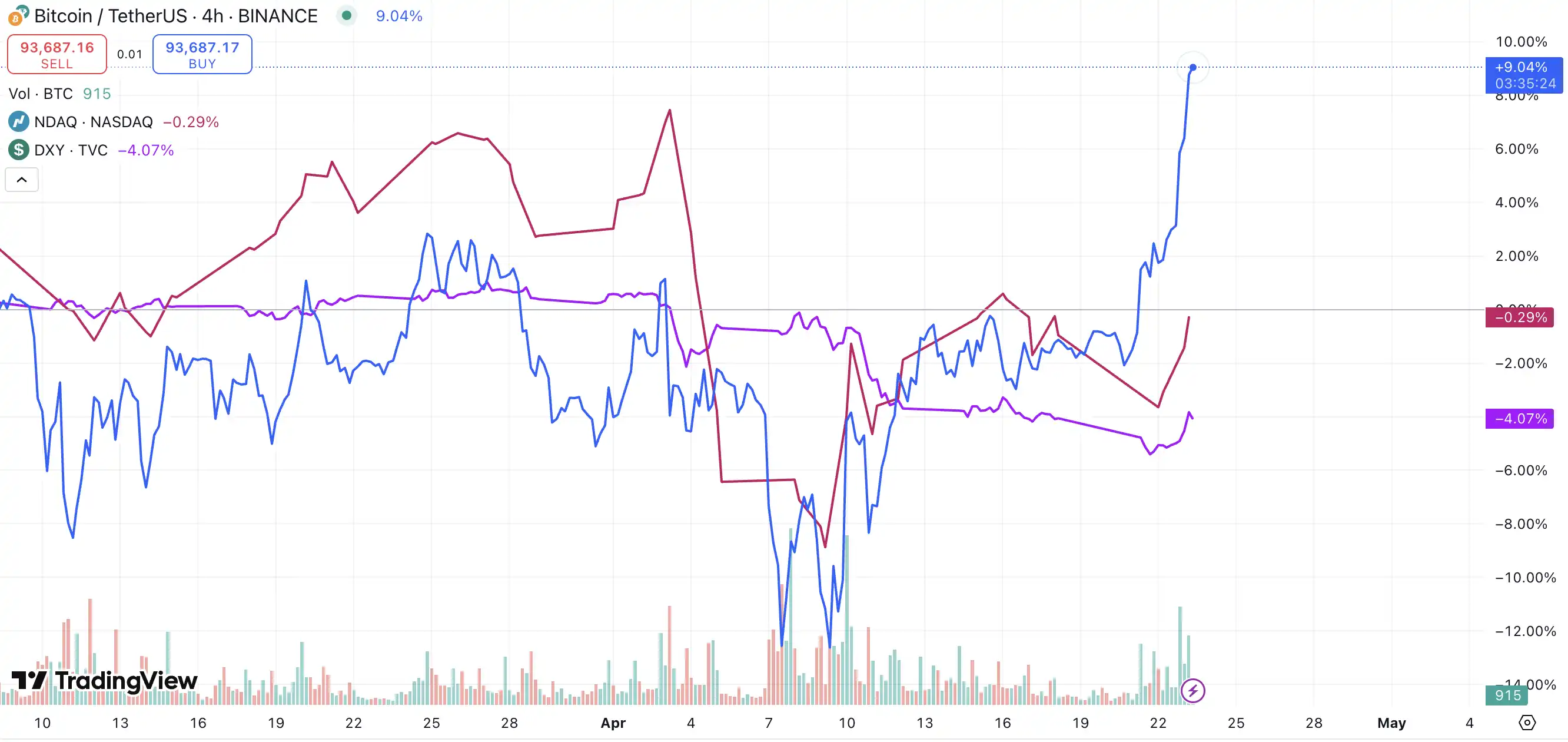
BTC vs. Nasdaq and USD Index Comparison Chart
"We noticed the true 'decoupling' signs began to emerge on Sunday evening," said Patrick Liou. "Considering Trump's increasingly strong language towards the Fed and the unfolding trade agreement negotiations post-'Liberation Day,' investors are in a risk-off mode when evaluating the U.S. market. Interestingly, one of the directions of fund rotation is towards Bitcoin, and we can clearly see Bitcoin exhibiting a distinct decoupling trend from U.S. stocks and the dollar."
Following the Western Easter holiday, the stock market saw a pullback on Monday, but Bitcoin rallied against the trend, following gold's strong performance. The Bitcoin spot ETF recorded a net inflow of $381.4 million that day, the highest single-day inflow since the end of January, further demonstrating the strong demand for Bitcoin in the market.
Analysts at QCP Capital pointed out that the soaring gold price, weakening dollar, and institutional funds flowing into Bitcoin have jointly supported the argument that "Bitcoin is decoupling." "Bitcoin's resilience in overnight trading further strengthens the decoupling market narrative," the QCP analysts stated. "As funds shift towards safe-haven and inflation-resistant assets, Bitcoin and gold are becoming the biggest beneficiaries of fund flight from the dollar risk.
While analysts from QCP Capital and Bernstein emphasize the attractiveness of Bitcoin as a safe-haven asset, Jake O., an OTC trader at Wintermute, cautioned that this "decoupling" phenomenon may be broken after a dollar rebound.
「As I mentioned yesterday, I believe that this current market surge is mainly driven by the weakening of the US Dollar. If this is indeed the case, once the DXY stabilizes, the decoupling of Bitcoin from the US stock market may be difficult to sustain. This is the most crucial variable this week, and this assumption has not yet been truly tested.」
Trump Has No Intention to Fire Powell
On April 22, as Trump criticized Federal Reserve Chair Powell as a "total loser" on Truth Social, and called for an immediate rate cut, even considering dismissal, the market was concerned that the Fed's independence was compromised. The US Dollar Index (DXY) quickly fell below 98, hitting a nearly three-year low.
Analysts at Bitunix stated that if US political pressure persists, it could undermine the legal framework of the Federal Reserve, prompting global funds to accelerate their search for safe havens. This could also accelerate the move of funds from the US Dollar to assets such as Bitcoin and stablecoins, which have anti-censorship and anti-seizure properties.
However, last night, ECB President Lagarde stated in an interview: "Both Powell and I are used to political pressure, and I have great respect for them, believing that Powell will not be dismissed." Citigroup's Chief Economist stated that Trump will not fire Federal Reserve Chair Powell, and "this boundary will not be crossed."
Therefore, Trump's lack of intention to fire Powell has also maintained the stability of the global financial market order. But if Trump does indeed fire Federal Reserve Chair Powell as rumored, the US Dollar Index and US stocks will face further downward pressure, while Bitcoin and gold will become the mainstream choice for safe-haven funds.
You may also like

Japan’s Three Megabanks Plan Joint Stablecoin Issuance in Fiscal 2026
MUFG, SMBC, and Mizuho reportedly plan to jointly issue fiat-pegged stablecoins in fiscal 2026, signaling Japan’s growing push into bank-led digital payment infrastructure.

Humanity Discloses H Token Dual-Chain Attack Details, With Losses on Ethereum and BSC Exceeding $36 Million
Humanity said the H token attack across Ethereum and BSC caused more than $36 million in losses after leaked ProxyAdmin keys enabled malicious contract upgrades and token minting.

White House Discusses CLARITY Act With Law Enforcement Ahead of Senate Vote
The White House discussed the CLARITY Act with law enforcement ahead of a Senate vote, focusing on illicit finance risks and developer protections.

$75 billion in foreign capital has fled, and South Korean retail investors have absorbed it all using leverage

Bitcoin Trading Guide 2026: Strategies for Experienced Traders

What Is XAUT and PAXG? Why Tokenized Gold Is Booming in 2026

Cryptocurrency CEXs are flocking to sell US stocks, and traditional brokerages are facing an "uninvited guest."

Will the SpaceX IPO Hurt Bitcoin? Here's What Traders Are Watching
Foreign selling in the South Korean stock market accelerates, with cumulative net sales reportedly reaching $75 billion this year
On June 9, The Kobeissi Letter, citing Goldman Sachs data, reported that global investors are selling South Korean stocks at an unusually rapid pace. In the latest trading session, foreign investors sold about $801 million worth of Kospi constituent stocks again; total foreign outflows last week reached about $10 billion, and the market has been in net foreign selling on nearly every trading day over the past month. According to the data cited in the report, foreign investors have sold about $75 billion worth of South Korean stocks so far this year. Meanwhile, South Korean retail and institutional investors together recorded roughly $69 billion in net buying over the same period, suggesting that the market’s main buying support has come from domestic capital rather than returning overseas funds. The information currently disclosed still mainly comes from The Kobeissi Letter’s retelling and Goldman Sachs data summaries, while public details on the statistical period and the specific definition of “selling” remain relatively limited.

Fortune Warns of Strategy’s Financing Structure Risks as Bitcoin Premium Narrows
Fortune warned that Strategy’s Bitcoin treasury model faces growing financing risks as MSTR’s net asset premium narrows and preferred stock dividend pressure increases.

Ferrari Challenge Le Mans: Carl Moon to Dominate in WEEX Livery

Sahara AI Responds to SAHARA’s Sharp Drop: No Contract or Product Security Issues Found, Internal Investigation Underway
Sahara AI responded to SAHARA’s 60% price drop, saying no token contract or product security issues have been found and an internal investigation is underway.

WEEX Deposit/Withdrawal Dynamic Island: Your Asset Status, Always in Sight
Scaling Crypto Derivatives: The Digital Asset Infrastructure Behind High-Volume Trading
In the fast-moving digital asset ecosystem, derivatives platforms face an extreme architectural test. High-leverage futures markets demand more than just standard security—they require absolute operational precision, zero-latency matching engines, and ironclad structural scalability, all while navigating intense market volatility.
As global platforms scale to meet these demands, the industry is shifting away from rigid, monolithic setups toward a more agile, "decoupled" infrastructure philosophy.
The Blueprint for High-Volume Copy TradingFor elite global exchanges like WEEX (founded in 2018), this architectural choice becomes critical when scaling high-volume retail features like social copy trading. When thousands of users automatically mirror the real-time strategies of elite traders simultaneously, it triggers sudden, monumental spikes in concurrent transactional volume.
To prevent execution latency or settlement bottlenecks during these peak volatility events, a platform's primary engine must remain entirely dedicated to risk management, copy-trade synchronization, and order matching.
The Architectural Rule: New-generation platforms must separate front-end user execution engines from heavy backend infrastructural overhead to eliminate operational friction.
By separating these layers, platforms can maintain complete sovereignty over their trading environments and user experiences while strategically aligning with institutional-grade infrastructure ecosystems. This strategic framework allows modern exchanges to leverage advanced Digital Asset Custody infrastructure such as Cobo’s behind the scenes, ensuring that backend wallet management scales elastically alongside trading spikes.
Capitalizing on Market Momentum and 400× LeverageIn a derivatives arena where platforms offer up to 400× leverage on perpetual contracts, capital efficiency and market agility are core business metrics. To capture market momentum, an exchange needs the ability to rapidly expand its asset offerings, supporting everything from legacy crypto assets to sudden, trending altcoins across a massive library of trading pairs.
Adopting a flexible, scalable Wallet-as-a-Service (WaaS) solution such as Cobo’s could completely rewrite the development timeline for high-growth exchanges. Instead of spending months of engineering capital building out custom backend wallet architectures for every new blockchain network, platforms can deploy localized infrastructure in days.
This agility allows platforms to instantly scale their listings to over a thousand trading pairs without compromising security or delaying time-to-market. It mirrors the exact operational advantages seen during high-velocity market events, similar to how advanced wallet infrastructure empowers platforms during sudden asset surges; allowing exchanges to pass that speed and liquidity directly to their global user base.
A Mature Foundation for GrowthThe synergy between trusted infrastructure ecosystems and global trading platforms represents the natural evolution of a maturing crypto market. As WEEX continues to scale its global spot and derivatives offerings for over 6 million users, adopting robust backend paradigms proves that platforms no longer have to compromise between cutting-edge trading velocity and uncompromised structural security.

Morning Report | BitMine increased its holdings by 126,971 ETH last week; trader Eugene announced his exit from the crypto market

Wang Chuan: How can one not feel anxious after the neighbor Old Wang made thirty times profit by investing in storage stocks? (Seven) - A quarter-century cycle

Get Paid to Onboard? Try WEEX’s New Homepage with Rewards for Registration, Deposit & Trade
WEEX Custom Layout: Build Your Perfect Trading Workspace in Seconds
Japan’s Three Megabanks Plan Joint Stablecoin Issuance in Fiscal 2026
MUFG, SMBC, and Mizuho reportedly plan to jointly issue fiat-pegged stablecoins in fiscal 2026, signaling Japan’s growing push into bank-led digital payment infrastructure.
Humanity Discloses H Token Dual-Chain Attack Details, With Losses on Ethereum and BSC Exceeding $36 Million
Humanity said the H token attack across Ethereum and BSC caused more than $36 million in losses after leaked ProxyAdmin keys enabled malicious contract upgrades and token minting.
White House Discusses CLARITY Act With Law Enforcement Ahead of Senate Vote
The White House discussed the CLARITY Act with law enforcement ahead of a Senate vote, focusing on illicit finance risks and developer protections.
$75 billion in foreign capital has fled, and South Korean retail investors have absorbed it all using leverage
Bitcoin Trading Guide 2026: Strategies for Experienced Traders
What Is XAUT and PAXG? Why Tokenized Gold Is Booming in 2026


