
Forbes: In-Depth Analysis of How Trump's Crypto Policy is Reshaping the US Digital Economy Landscape


Original Article Title: How Trump's Bitcoin Policies Are Making The U.S. A Crypto Superpower
Original Article Author: Leigh Cuen, Forbes
Original Article Translation: Luffy, Foresight News
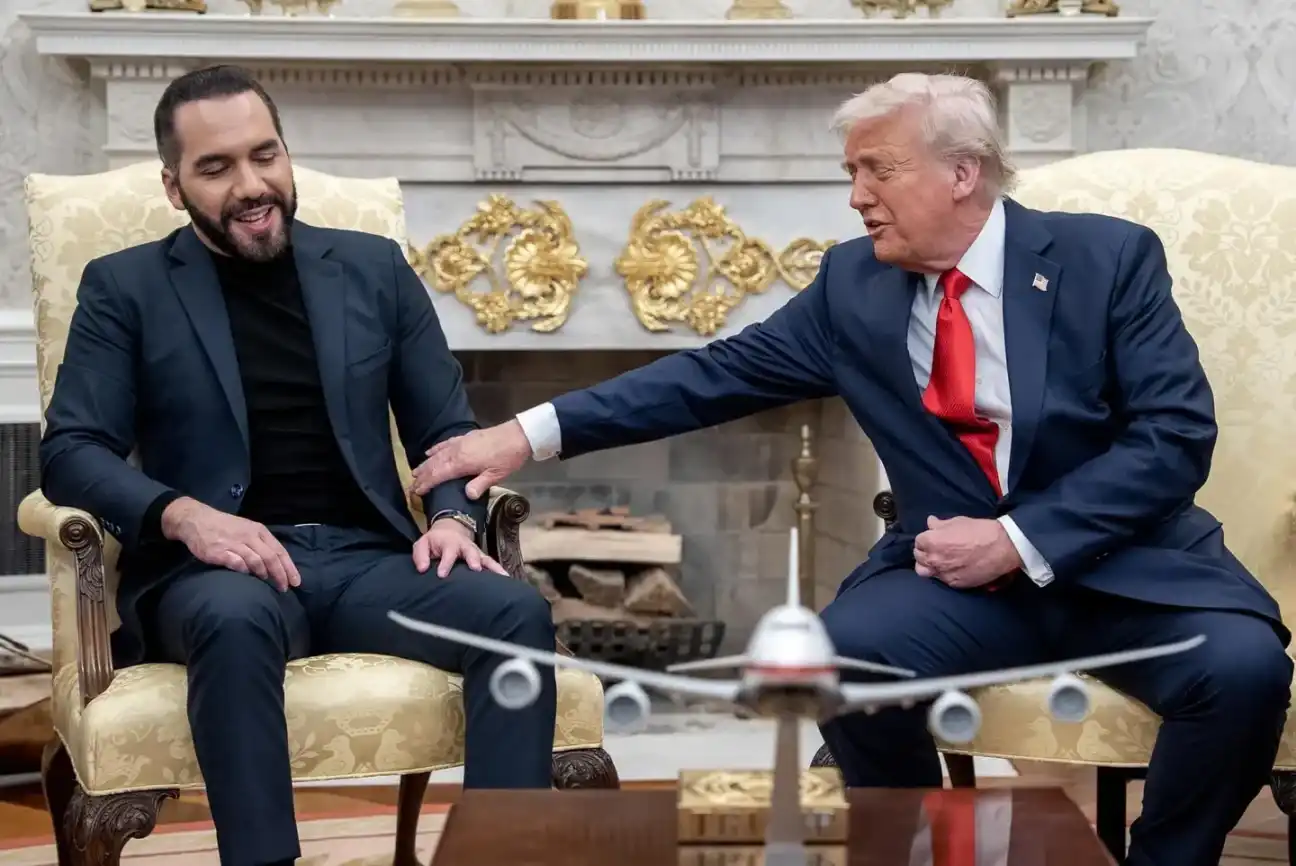
U.S. President Donald Trump (right) and Salvadoran President Nayib Bukele both champion pro-Bitcoin economic strategies, setting themselves apart in the global crypto market. Image Source: Bloomberg
Trump is undergoing a comprehensive overhaul of cryptocurrency regulation, updating tax policies, and embarking on establishing a national Bitcoin reserve strategy, setting the U.S. on the path to becoming the first Group of Seven (G7) economy to fully embrace cryptocurrency.
Forbes' author Sandy Carter wrote, "Trump's second term government has been reshaping America's cryptocurrency landscape."
Small countries like El Salvador have attracted Bitcoin companies by establishing strategic Bitcoin reserves and crypto-friendly policies. The International Monetary Fund (IMF) recently constrained El Salvador's future Bitcoin purchases, but it has already amassed around 6,101 Bitcoins as a strategic reserve. Reportedly, one of the world's most profitable crypto companies, Tether, has also relocated its headquarters to El Salvador.
Similar to El Salvador's President Bukele, Trump courted the crypto constituency during his 2024 election campaign. Last July, he made a striking commitment to the enthusiastic crypto crowd at the Nashville Bitcoin conference.
Forbes' author Susie Violet Ward, who attended the conference, wrote that Trump stated, "The U.S. will become a 'Bitcoin mining powerhouse,' and urged supporters to never sell their Bitcoin."
Susie Violet Ward wrote, "The fusion of political resolve and financial innovation marks a pivotal moment in the Trump era and signifies a broader acceptance of Bitcoin in mainstream politics."
Despite Trump's erratic tariff policies causing market turmoil, his crypto-friendly policies have helped the Bitcoin price remain above the previous cycle's high of around $73,000. The relative stability of cryptocurrency prices may partly be attributed to the U.S. government's newly adopted more lenient regulatory stance.

The Republican Party has seen Singapore's success through a minimalist regulatory approach and is adjusting this crypto strategy to suit the U.S. situation
Trump's Crypto Policy Emulates Singapore and Dubai's Light Regulatory Model
Zennon Kapron, a fintech writer in Singapore and Director of the Asia Securities and Financial Markets Association, wrote that Singapore has established itself as a crypto hub by avoiding complex regulation, not even needing to establish a Bitcoin strategic reserve.
Kapron stated: "Crypto companies flocked to Singapore not so much because of what the country did specifically but because of what it didn't prohibit."
He added that through a minimalist regulatory approach, Singapore became the world's third-largest blockchain investment center in 2023, behind only the U.S. and the U.K.
Trump saw the rapid rise of Singapore through a light regulatory model and implemented a similar regulatory framework within his administration. This relatively laissez-faire strategy is more akin to the hands-off policies enjoyed by crypto investors in places like the Cayman Islands and Hong Kong. Following this line of thought, Trump signed H.J. Res. 25 on April 10, simplifying the tax paperwork originally complex (sometimes practically impossible to complete operationally) for decentralized finance (DeFi) brokers.
Forbes tax writer Robert Woods explained: "Taxpayers need to know when they acquired cryptocurrency, how much they paid, and what they received. Whereas this might be simple for stocks and real estate, it could be much more complicated for cryptocurrency. Many crypto investors make multiple purchases at different times over several years."
While crypto users and companies still need to report taxable events, streamlining paperwork makes it easier for Americans to comply with the law. Before this new tax guidance was introduced, the U.S. Treasury's Office of the Comptroller of the Currency had sent a letter in March that repealed guidance making it difficult for banks and thrifts to offer crypto services.
Earlier this month, a Department of Justice memorandum revealed that the government had disbanded a prosecutorial team focused on crypto companies. Forbes writer Andrea Tinianow noted that this shift at the DOJ could positively impact pending court cases related to privacy tools like Tornado Cash, which will determine "whether developers should face criminal liability for providing open-source code used by others to commit financial crimes." According to a memorandum from U.S. Deputy Attorney General Todd Blanche, law enforcement will no longer act as "regulators through prosecution" as "digital asset overseers" but will focus on combating "bad actors."
The memorandum notes: "The Department of Justice will no longer target cryptocurrency exchanges, coin mixing services, and offline wallets for inadvertent or unknowing violations by their end users." In short, the Department of Justice will not hold responsible the developers of encryption tools or taxpaying businesses providing legitimate crypto services. The Trump administration hopes that the government will no longer intervene in the crypto industry.
Forbes tax contributor Joshua Smeltzer wrote: "This action aims to reduce regulatory burdens, encourage responsible innovation, and ensure that regardless of whether the underlying technology involves blockchain, banking activities are treated consistently."
This move may have been inspired by smaller countries taking a more lenient approach to crypto regulation. Dubai-based lawyer and Forbes contributor Irina Heaver wrote that hundreds of crypto companies have flocked to the UAE, regulated by Dubai DMCC. They now contribute 7% of the UAE's Gross Domestic Product (GDP).
Heaver wrote: "Clear regulation has been a cornerstone of Dubai's success as a crypto hub."
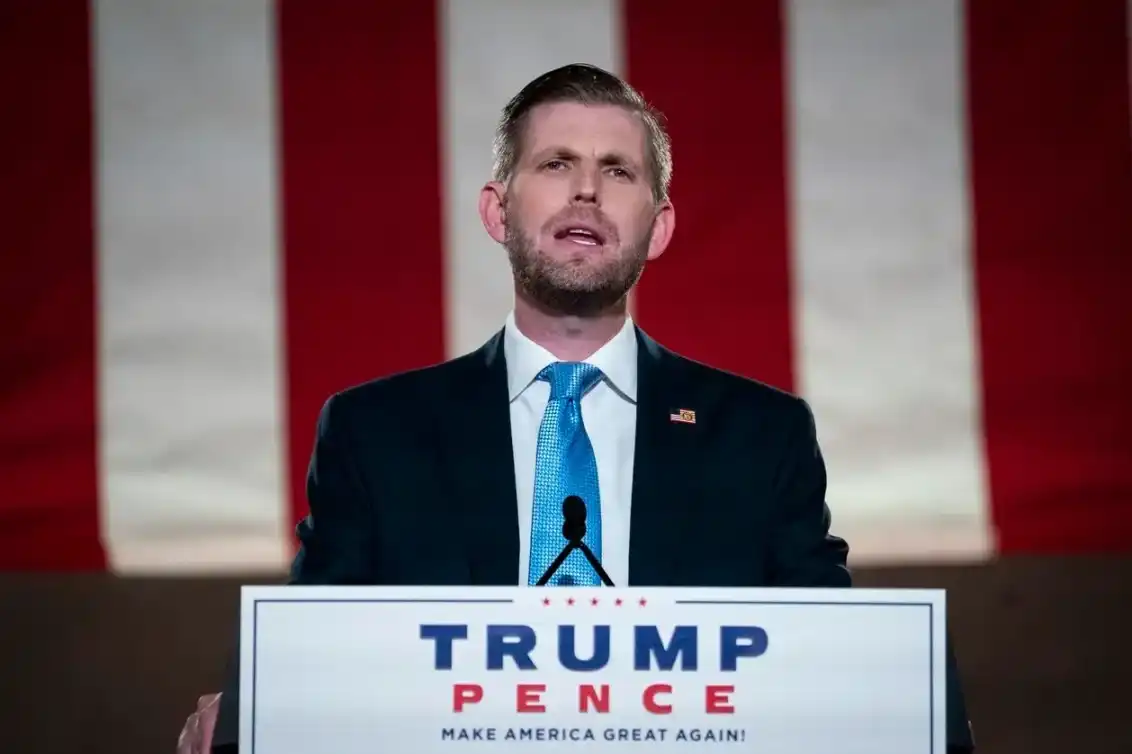
Recently, President Trump's son Eric Trump, along with his brother Donald Trump Jr., announced the formation of a new Bitcoin mining company called American Bitcoin
Bitcoin Mining Dominance
Trump makes no secret of his reasons for clearing the way for the crypto industry: to bring high-paying jobs and dominance in crypto mining to the United States.
According to the Cambridge Bitcoin Electricity Consumption Index, the most powerful crypto mining companies in 2022 come from China or Russia. Since then, dozens of companies have moved to Texas, but this shift stalled during the Biden administration.
Now, Trump's second term coincides with the once-every-four-years bull market cycle of the crypto market; since Trump's victory six months ago, the price of Bitcoin has risen by nearly 30%.
Forbes contributor, Bitcoin Core developer, and venture capitalist Abubakar Nur Khalil wrote: "The price of Bitcoin surges in every halving cycle, whether in the halving year or two years later. Unlike previous halvings, investors can now take advantage of an increasing array of financial tools and methods to capture Bitcoin's price movements, from directly purchasing Bitcoin, investing in stocks of Bitcoin mining companies, or holding stocks of publicly traded companies with Bitcoin on their balance sheets, to Bitcoin ETFs."
Pennsylvania State University Dickinson Law School former professor and Forbes contributor Tonya Evans, among other legal experts, also pointed out how the Trump family's extraction of personal gain from a cryptocurrency project is an unprecedented move for a former president. In addition to various altcoin companies, Eric Trump and Donald Trump Jr. announced earlier this month their new Bitcoin mining company, American Bitcoin.

Trump Hopes to Include Assets Such as BTC, ETH, ADA, and XRP in Strategic Cryptocurrency Reserve
Bipartisan Support for Strategic Crypto Reserve
So far, Trump's Bitcoin reserve strategy seems to have garnered bipartisan support. Forbes contributor Sam Lyman described California Representative Ro Khanna as "an important voice within the Democratic Party's core group on crypto issues," while Alabama Democratic Representative Shomari Figures and Arizona Democratic Representative Yassamin Ansari have also made public statements indicating potential support for the strategy. Ansari pledged that she would "lead the way in blockchain and crypto innovation."
Furthermore, 14 Democratic lawmakers, including New York Representative Ritchie Torres, wrote to the Democratic National Committee chair last year asking the party to "take a forward-looking approach to digital assets and blockchain technology." Even Trump, in March, expressed a desire to include high-risk assets like ETH, ADA, and XRP in the strategic crypto reserve.
In addition to welcoming Bitcoin mining companies, holding various cryptocurrencies in the strategic reserve, and pausing enforcement actions against small industry participants, the Trump administration has also capitalized on the bipartisan interest in safeguarding dollar-backed stablecoins. If widely adopted crypto assets remain pegged to the dollar, this could indirectly benefit the U.S. economy.
Cleve Mesidor, Executive Director of the Blockchain Foundation and Forbes contributor, stated, "The recent 13-hour marathon amendment of the Stablecoin Transparency and Accountability to Promote a Better Ledger Economy Act may suggest the need for longer-term bipartisan cooperation."
It is now too early to claim whether these policies will attract new companies to the U.S., but industry giants like Coinbase CEO Brian Armstrong are now criticizing the previous administration in favor of the Trump administration's policies. Many crypto companies like Coinbase, Kraken, Ripple, Robinhood, and Circle also donated to Trump's transition team. Shortly after Ripple's donation, U.S. regulatory agencies dropped legal charges related to the company's involvement with XRP, and the Trump administration also included XRP in the strategic reserve plan.
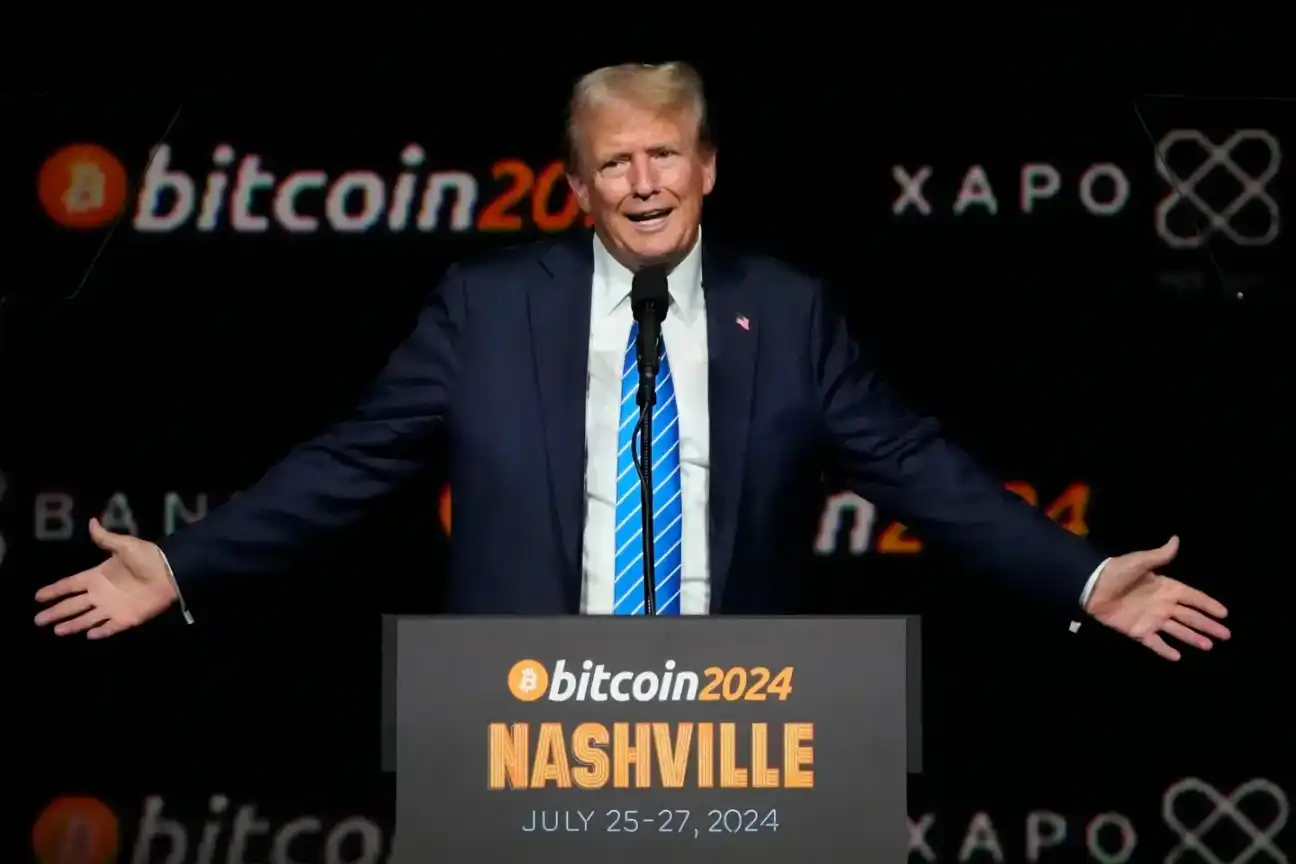
Trump Attended Bitcoin 2024 Conference in Nashville, Tennessee Last Year
The Future of US Cryptocurrency Companies and Bitcoin Price Trends
The bipartisan efforts to ease regulations and establish a strategic reserve of crypto assets seem to be insulating the cryptocurrency market from the turmoil on Wall Street. The current price trend of Bitcoin appears to be more stable compared to the US stock market.
The current halving cycle may conclude in early 2026, and the policies of the Trump administration could further impact the Bitcoin market. This includes the normalization of conflicts of interest. The Trump family is now actively involved in the crypto business, as well as reallocating law enforcement resources and pardoning Bitcoin "OGs" like Silk Road founder Ross Ulbricht and BitMEX exchange founders Arthur Hayes, Benjamin Delo, Samuel Reed, and Gregory Dwyer.
Looking ahead, conducting crypto business in the US may face less legal risk.
You may also like

Japan’s Three Megabanks Plan Joint Stablecoin Issuance in Fiscal 2026
MUFG, SMBC, and Mizuho reportedly plan to jointly issue fiat-pegged stablecoins in fiscal 2026, signaling Japan’s growing push into bank-led digital payment infrastructure.

Humanity Discloses H Token Dual-Chain Attack Details, With Losses on Ethereum and BSC Exceeding $36 Million
Humanity said the H token attack across Ethereum and BSC caused more than $36 million in losses after leaked ProxyAdmin keys enabled malicious contract upgrades and token minting.

White House Discusses CLARITY Act With Law Enforcement Ahead of Senate Vote
The White House discussed the CLARITY Act with law enforcement ahead of a Senate vote, focusing on illicit finance risks and developer protections.

$75 billion in foreign capital has fled, and South Korean retail investors have absorbed it all using leverage

Bitcoin Trading Guide 2026: Strategies for Experienced Traders

What Is XAUT and PAXG? Why Tokenized Gold Is Booming in 2026

Cryptocurrency CEXs are flocking to sell US stocks, and traditional brokerages are facing an "uninvited guest."

Will the SpaceX IPO Hurt Bitcoin? Here's What Traders Are Watching
Foreign selling in the South Korean stock market accelerates, with cumulative net sales reportedly reaching $75 billion this year
On June 9, The Kobeissi Letter, citing Goldman Sachs data, reported that global investors are selling South Korean stocks at an unusually rapid pace. In the latest trading session, foreign investors sold about $801 million worth of Kospi constituent stocks again; total foreign outflows last week reached about $10 billion, and the market has been in net foreign selling on nearly every trading day over the past month. According to the data cited in the report, foreign investors have sold about $75 billion worth of South Korean stocks so far this year. Meanwhile, South Korean retail and institutional investors together recorded roughly $69 billion in net buying over the same period, suggesting that the market’s main buying support has come from domestic capital rather than returning overseas funds. The information currently disclosed still mainly comes from The Kobeissi Letter’s retelling and Goldman Sachs data summaries, while public details on the statistical period and the specific definition of “selling” remain relatively limited.

Fortune Warns of Strategy’s Financing Structure Risks as Bitcoin Premium Narrows
Fortune warned that Strategy’s Bitcoin treasury model faces growing financing risks as MSTR’s net asset premium narrows and preferred stock dividend pressure increases.

Ferrari Challenge Le Mans: Carl Moon to Dominate in WEEX Livery

Sahara AI Responds to SAHARA’s Sharp Drop: No Contract or Product Security Issues Found, Internal Investigation Underway
Sahara AI responded to SAHARA’s 60% price drop, saying no token contract or product security issues have been found and an internal investigation is underway.

WEEX Deposit/Withdrawal Dynamic Island: Your Asset Status, Always in Sight
Scaling Crypto Derivatives: The Digital Asset Infrastructure Behind High-Volume Trading
In the fast-moving digital asset ecosystem, derivatives platforms face an extreme architectural test. High-leverage futures markets demand more than just standard security—they require absolute operational precision, zero-latency matching engines, and ironclad structural scalability, all while navigating intense market volatility.
As global platforms scale to meet these demands, the industry is shifting away from rigid, monolithic setups toward a more agile, "decoupled" infrastructure philosophy.
The Blueprint for High-Volume Copy TradingFor elite global exchanges like WEEX (founded in 2018), this architectural choice becomes critical when scaling high-volume retail features like social copy trading. When thousands of users automatically mirror the real-time strategies of elite traders simultaneously, it triggers sudden, monumental spikes in concurrent transactional volume.
To prevent execution latency or settlement bottlenecks during these peak volatility events, a platform's primary engine must remain entirely dedicated to risk management, copy-trade synchronization, and order matching.
The Architectural Rule: New-generation platforms must separate front-end user execution engines from heavy backend infrastructural overhead to eliminate operational friction.
By separating these layers, platforms can maintain complete sovereignty over their trading environments and user experiences while strategically aligning with institutional-grade infrastructure ecosystems. This strategic framework allows modern exchanges to leverage advanced Digital Asset Custody infrastructure such as Cobo’s behind the scenes, ensuring that backend wallet management scales elastically alongside trading spikes.
Capitalizing on Market Momentum and 400× LeverageIn a derivatives arena where platforms offer up to 400× leverage on perpetual contracts, capital efficiency and market agility are core business metrics. To capture market momentum, an exchange needs the ability to rapidly expand its asset offerings, supporting everything from legacy crypto assets to sudden, trending altcoins across a massive library of trading pairs.
Adopting a flexible, scalable Wallet-as-a-Service (WaaS) solution such as Cobo’s could completely rewrite the development timeline for high-growth exchanges. Instead of spending months of engineering capital building out custom backend wallet architectures for every new blockchain network, platforms can deploy localized infrastructure in days.
This agility allows platforms to instantly scale their listings to over a thousand trading pairs without compromising security or delaying time-to-market. It mirrors the exact operational advantages seen during high-velocity market events, similar to how advanced wallet infrastructure empowers platforms during sudden asset surges; allowing exchanges to pass that speed and liquidity directly to their global user base.
A Mature Foundation for GrowthThe synergy between trusted infrastructure ecosystems and global trading platforms represents the natural evolution of a maturing crypto market. As WEEX continues to scale its global spot and derivatives offerings for over 6 million users, adopting robust backend paradigms proves that platforms no longer have to compromise between cutting-edge trading velocity and uncompromised structural security.

Morning Report | BitMine increased its holdings by 126,971 ETH last week; trader Eugene announced his exit from the crypto market

Wang Chuan: How can one not feel anxious after the neighbor Old Wang made thirty times profit by investing in storage stocks? (Seven) - A quarter-century cycle

Get Paid to Onboard? Try WEEX’s New Homepage with Rewards for Registration, Deposit & Trade
WEEX Custom Layout: Build Your Perfect Trading Workspace in Seconds
Japan’s Three Megabanks Plan Joint Stablecoin Issuance in Fiscal 2026
MUFG, SMBC, and Mizuho reportedly plan to jointly issue fiat-pegged stablecoins in fiscal 2026, signaling Japan’s growing push into bank-led digital payment infrastructure.
Humanity Discloses H Token Dual-Chain Attack Details, With Losses on Ethereum and BSC Exceeding $36 Million
Humanity said the H token attack across Ethereum and BSC caused more than $36 million in losses after leaked ProxyAdmin keys enabled malicious contract upgrades and token minting.
White House Discusses CLARITY Act With Law Enforcement Ahead of Senate Vote
The White House discussed the CLARITY Act with law enforcement ahead of a Senate vote, focusing on illicit finance risks and developer protections.
$75 billion in foreign capital has fled, and South Korean retail investors have absorbed it all using leverage
Bitcoin Trading Guide 2026: Strategies for Experienced Traders
What Is XAUT and PAXG? Why Tokenized Gold Is Booming in 2026


