
Hormuz Strait Triggers Oil War, Will the Fed Blink with a Rate Cut in June?

Original Title: "Hormuz Strait Triggers Oil War, Will the Fed Bow to a Rate Cut in June?"
Original Author: Mahe, Foresight News
On March 11th, the US Bureau of Labor Statistics released the Consumer Price Index (CPI) report for February, showing a seasonally adjusted 0.3% monthly increase in CPI, with a 2.4% year-over-year increase, unchanged from January; the core CPI rose 0.2% monthly and 2.5% annually.
Consistent with the previous month, the energy index rose by 0.5% monthly, with gasoline prices up by 0.8%, but still down by 5.6% annually; the food index increased by 0.4% monthly and 3.1% annually; the housing component saw a 3.0% annual increase, with a modest 0.2% monthly rise, indicating some easing in rent and owners' equivalent rent pressures.
This report largely met market expectations, with inflation staying steady at the 2.4% level, and no significant signs of a core index acceleration. Data for February was collected until the end of February, just before the US launched its first airstrike on Iran, therefore not fully reflecting the subsequent energy price volatility. Several institutions' analyses suggest that if the slight downward bias from data adjustments during the government shutdown is removed, actual inflation may be close to 2.8%; conversely, excluding the tariff pass-through effect could lower it to around 2.2%, but regardless of the adjustment, inflation is still below the Fed's 2% target, especially as the sticky housing and services subcomponents remain at elevated levels.
Morgan Stanley points out that the Fed may still restart rate cuts as early as June, but the oil price shock from the Iran conflict could delay this process.
The bank's economists currently maintain their earlier prediction that the Fed will cut rates by 25 basis points in both June and September this year—although the rise in energy prices may exacerbate inflationary pressures. However, they also believe that the Fed may postpone the first rate cut to September or even December, either of which could push the next rate cut back to 2027.
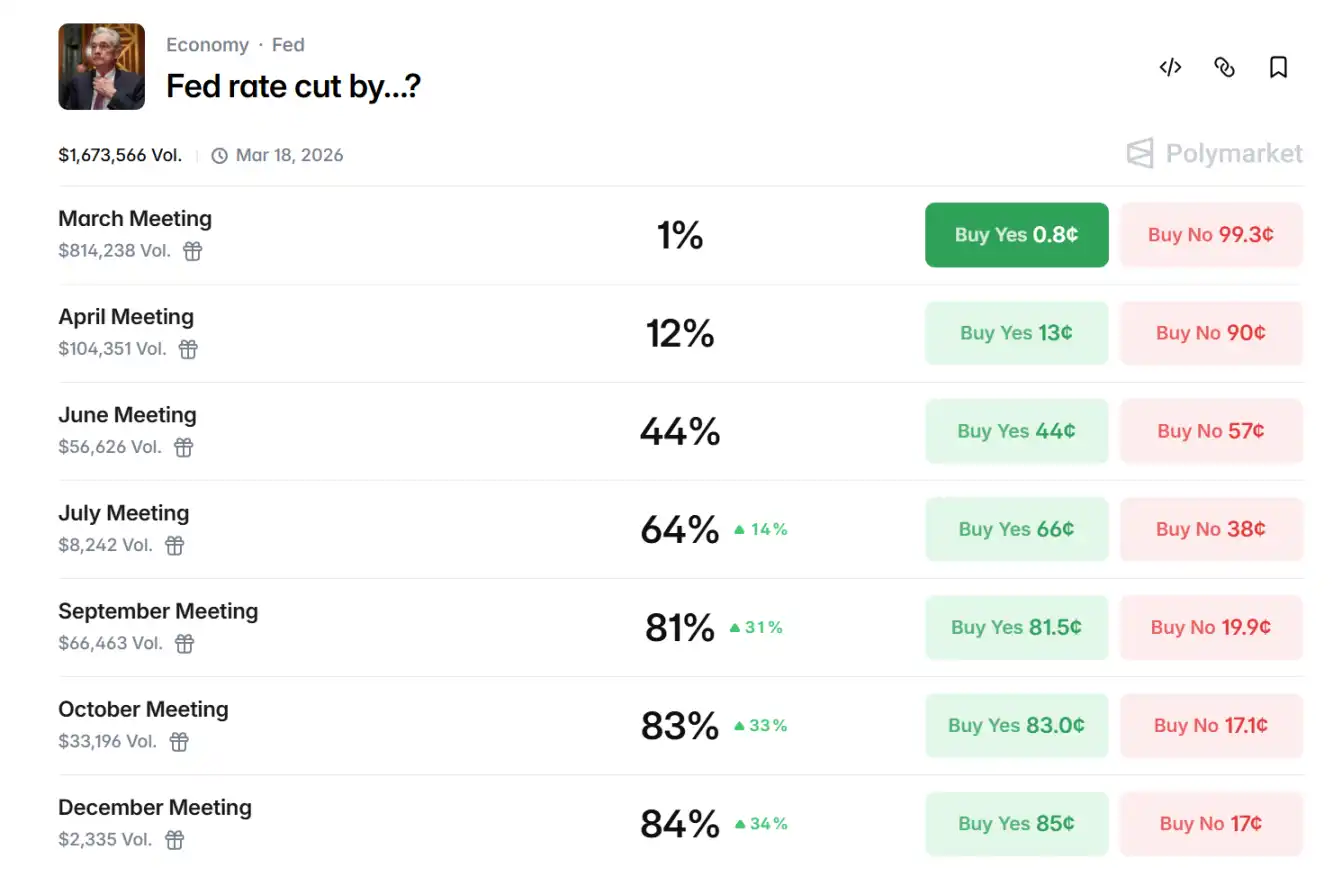
Data on Polymarket shows that the market is currently betting on an 81% probability of a rate cut in September, a 64% probability in June, and a 12% probability in April this year.
Looking ahead to the second half of the year, the Fed's rate cut path remains uncertain. The evolution of the war, the trajectory of inflation, and employment data will be critical variables. If energy prices continue to rise, the Fed may opt to prolong the high-interest-rate cycle; conversely, easing geopolitical risks coupled with a decline in core inflation could open up space for 1-2 rate cuts. For cryptocurrency, maintaining high rates will continue to suppress risk appetite and valuation, but once a clear rate cut signal emerges, market liquidity will recover, providing upward momentum for Bitcoin prices.
Strait of Hormuz in Focus as Oil Crisis Looms
A concurrent US-Iran military conflict further complicates the policy landscape.
On February 28, the US and Israel carried out joint airstrikes against Iran, intensifying a conflict that has been ongoing for nearly two weeks, involving multiple rounds of strikes, energy infrastructure risks, and regional spillover effects. Iran's potential control over the Strait of Hormuz has raised global concerns about energy supply, with the CPI energy sub-index rebounding as a preliminary reflection.
The Islamic Revolutionary Guard Corps (IRGC) of Iran has explicitly warned that they will not allow "a drop of oil" to pass through the Strait of Hormuz, stating that if the blockade continues, oil prices could soar to $200 per barrel. As the global energy chokepoint, the strait is currently effectively closed. Satellite data shows that most oil tankers are either stalled or rerouting on either side of the strait, with Iran broadcasting warnings that any vessel attempting to pass will be attacked. While the US Navy is providing escort, its coverage is limited, leading to a sharp decline in actual throughput.

The daily flow through the Strait of Hormuz carries around 20 million barrels of crude oil and petroleum products, accounting for approximately 20% of global oil consumption and a fifth of global liquefied natural gas (LNG) maritime trade, mainly from Saudi Arabia, Iraq, the UAE, Kuwait, and Iran's own exports, with Asia as the primary destination (dominated by China, India, Japan, South Korea, etc.). Once this bottleneck is cut off, a structural gap in global supply immediately emerges.
From the perspective of macroeconomic transmission mechanisms, the US-Iran conflict poses a systemic constraint on the Fed's interest rate path through the core channel of oil prices. Firstly, the conflict directly impacts global oil supply security. The Strait of Hormuz accounts for about 21% of global oil maritime trade volume, with any shipping disruption risk or military threat immediately leading to a surge in risk premium, causing a significant upward pressure on international oil prices. Iran has threatened to maintain the blockade if the conflict persists, with analysts warning that prices could test the range of $120-150 per barrel in the short term, or even higher; in the long run, if the strait remains closed for several weeks, a 1970s-style energy shock could recur, further driving inflation through cost-push effects.
Historical cases clearly confirm this logic: During the Gulf War in 1990, a sharp rise in oil prices led the Fed to postpone its easing cycle; during the Middle East turmoil in 2011 and the Russia-Ukraine conflict in 2022, energy price shocks forced the Fed to extend its tightening stance or delay the timing of easing. While the current US-Iran situation has not yet evolved into a comprehensive energy crisis, its continued disruption of oil prices is enough to make the FOMC more cautious when assessing financial conditions and inflation prospects, avoiding any loose signals that could amplify risks.
Market data shows that on March 12, Brent crude oil futures returned above $100, rising nearly 9% intraday. WTI crude oil is now trading at $93.52, with a daily gain of over 8%.
How Will BTC Develop Next
Since October 2025, according to glassnode on-chain data, the 7-day moving average of short-term holders has been consistently below 1, currently at 0.985, confirming that recent buyers are exiting at a loss—a typical characteristic of a bear market phase.
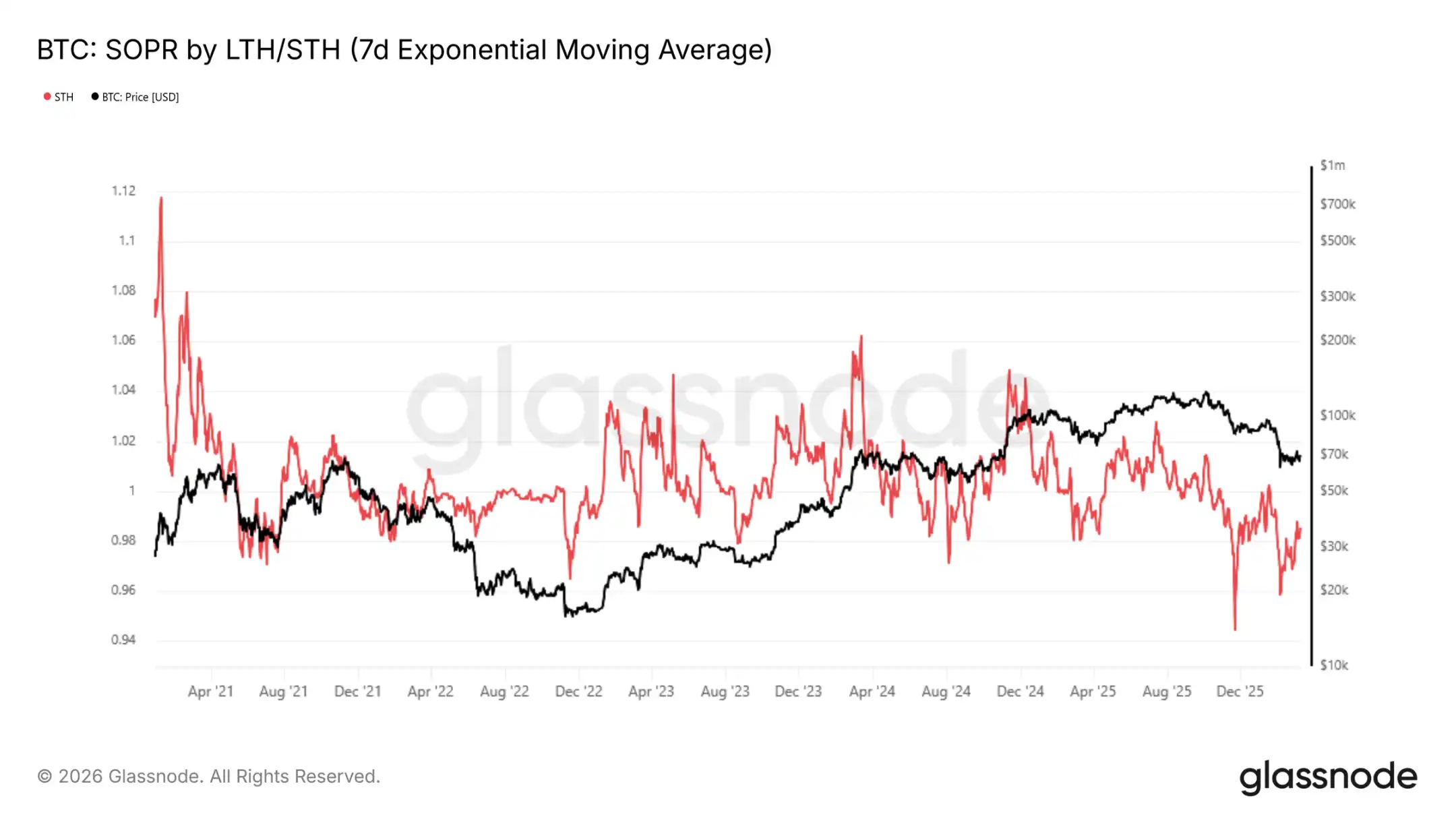
The price has been consistently confined between the realized price of $54,400 and the true market average price of $78,400. Until it firmly holds above $70,000, the return distribution exhibits a significant negative skewness.
Wintermute's post stated that macro factors are currently dominating everything, but last week cryptocurrencies showed resilience while stocks, bonds, and even gold were tumbling. Over the past few quarters, the high correlation between cryptocurrencies and stocks has begun to crack. The most likely explanation is that there are not many marginal sellers left. The leverage in the cryptocurrency market is around $60 billion, approximately half of its peak level. In contrast, speculative positions in gold have accumulated significantly. When all assets are falling, the forced selling pressure that cryptocurrency needs to absorb is much smaller.
From a 12-18 month timeframe perspective, the current price level is quite attractive, although the range at which BTC buyers are willing to enter extends from the current price all the way down to the $50,000 range. There is still room for further downside in the market, but most of the deleveraging phase seems to have passed. Currently, cryptocurrency is holding its ground and narrowing the performance gap with other risk assets. Whether this trend can continue once trading volume picks up remains to be seen. The upcoming FOMC (Federal Open Market Committee) meeting next week is a recent catalyst.
In terms of precious metals, according to Bitget data, gold is oscillating around $5,153, while silver is hovering around $85. The US Dollar Index (DXY) is currently fluctuating in the range of 99.35-99.48, and in the US bond market, the yield on the 10-year Treasury bond is currently around 4.21%-4.25%, with a slight intraday uptrend.
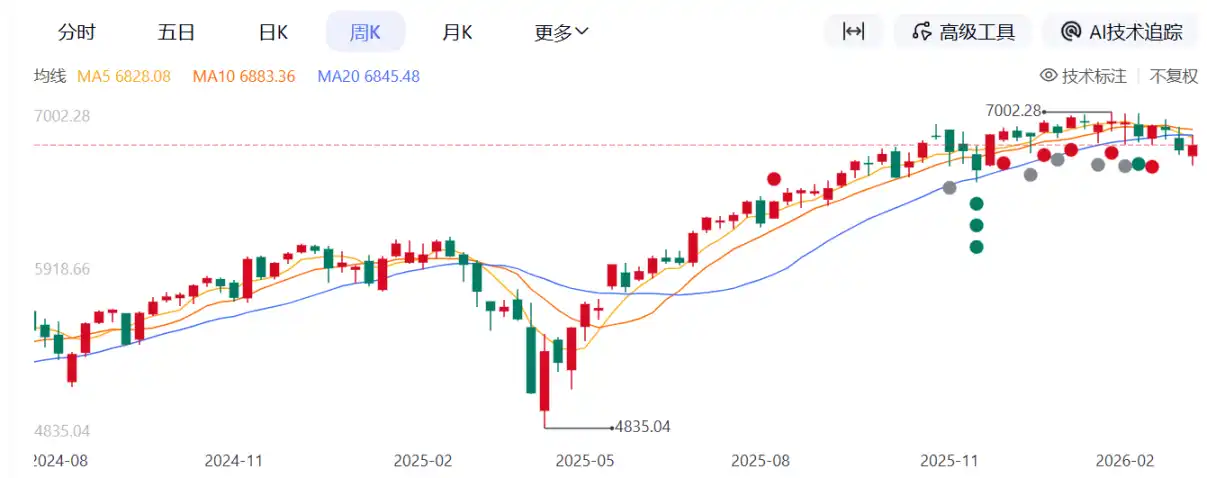
The S&P 500 Index is still experiencing a pullback, currently at 6,775.8. The Nasdaq Index is slightly up, now at 22,716.
You may also like

Bitcoin Market Analysis 2026: Can BTC Reach $150K by Year-End?

STRC unanchored by 11%, can the perpetual motion machine of Strategy still operate?

Bitcoin ETF Outflows Hit a Record $4.4 Billion: What Are Traders Doing With Their Cash?

WEEX App Just Got Smarter – New Tabs for Faster Trades & Easy Asset Management

Blockchain Capital Partner: The Core Secret of Arbitrage

WEEX All-New Search Features: Find, Trade & Earn Faster Than Ever

Will MicroStrategy fall into a death spiral? What will the macro trend be in the second half of the year?

Morning Report | Illinois signs the strictest digital asset tax law in the U.S.; RWA tokenization market size surpasses $43 billion, institutions accelerate the migration of on-chain assets

Full version of the debut Q&A! Federal Reserve Chairman Waller: Sticking to the 2% inflation target, establishing five special working groups, individual did not submit the dot plot

From Disruptor to Shadow Market: The Crypto Market is Becoming a Colony of Traditional Finance
Dalio's important long article: How to position in the current market environment?

OKX Star analyzes Binance's competitive advantages: when regulation levels the playing field, competition has just begun

New gameplay for participating in initial offerings on cryptocurrency exchanges
Why Is Bitcoin Down Today? What the Hawkish FOMC Means for SpaceX, Gold and Nasdaq

DeepSeek Financing Story

Morning Report | DeepSeek completes over $7 billion in financing, with a valuation exceeding $50 billion; Musk's personal wealth has surpassed the total market value of Bitcoin
Cursor, why did you get on Musk's spaceship?
In the name of charity, for the benefit of the family: How the Trump family turned charity into profit?
Bitcoin Market Analysis 2026: Can BTC Reach $150K by Year-End?
STRC unanchored by 11%, can the perpetual motion machine of Strategy still operate?
Bitcoin ETF Outflows Hit a Record $4.4 Billion: What Are Traders Doing With Their Cash?
WEEX App Just Got Smarter – New Tabs for Faster Trades & Easy Asset Management
Blockchain Capital Partner: The Core Secret of Arbitrage
WEEX All-New Search Features: Find, Trade & Earn Faster Than Ever


