
OKZOO: Pioneering AIoT New Frontier with In-house Hardware and Explosive Growth




Original Author and Source: OKZOO
Introduction: A New Paradigm of Data and Interaction
In the wave of rapid integration of AI, DePIN, and Web3 gaming, OKZOO is emerging as a force to be reckoned with, thanks to its unique and vertically integrated model. OKZOO aims to become a renewed, larger DePin; positioning itself as a pioneer in AIoT (AI + decentralized Internet of Things), dedicated to building the world's first large-scale real-world environmental data network. With an impressive ecosystem of close to 12 million users, a recently launched and rapidly popular V2 virtual pet AI app (attracting around 700,000 users since March 12), and support from industry giants, OKZOO is rapidly solidifying its market position. This report will delve into OKZOO's recent developments, analyze its core strengths—especially its often-overlooked hardware manufacturing capabilities—and assess its potential impact.

Opportunity Ahead: AIoT - Beyond Traditional DePIN
While DePIN has laid the foundation for a decentralized hardware network, OKZOO believes that the future belongs to AIoT—a more intelligent evolution that deeply integrates AI, not only for data analysis but also for enhancing data collection and user interaction itself. Traditional environmental data collection faces many challenges: sparse data, lack of real-time granularity (especially indoors), and potential validation hurdles. OKZOO is addressing these challenges by creating a user-driven grassroots network, focusing on collecting hyperlocal environmental data (air quality, noise, humidity, temperature, etc.) crucial for next-generation AI applications (in areas such as health, smart cities, climate monitoring). They define AIoT as the "renewed, larger DePIN," a narrative that resonates in a market seeking real-world practicality.
OKZOO's Integrated Solution: When Smart Hardware Meets Engaging Software
OKZOO's ecosystem is built on seamless hardware and software collaboration:
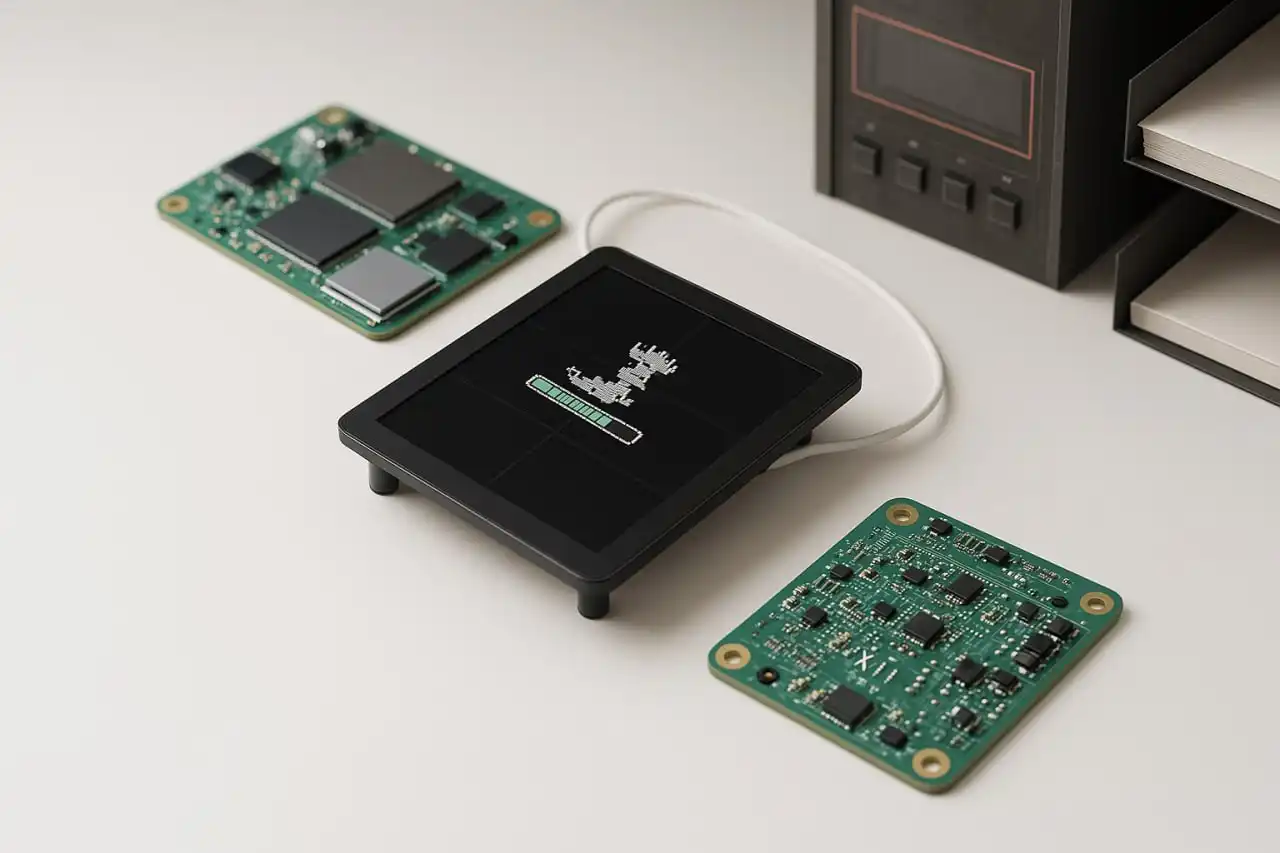
1. P-mini Device: This is a portable AIoT device equipped with sensors designed to collect a wide range of environmental data from outdoor and home environments. Future iterations, such as the watch-shaped P-mini o2, are also in the pipeline.
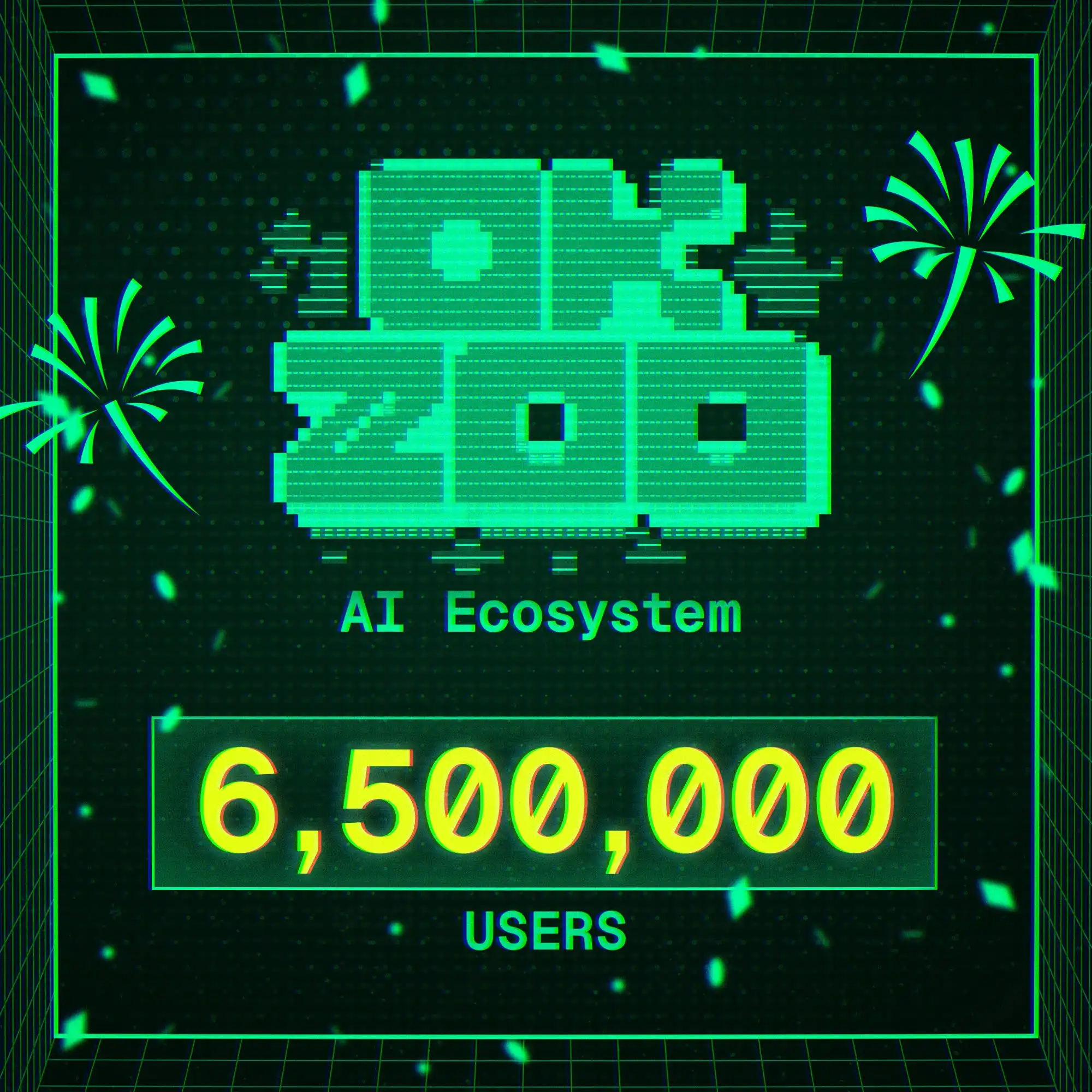
2. OKZOO V2 Virtual AI Pet App: Launched successfully on March 12, this AI-driven virtual pet app serves as the interactive frontend that attracts users. Unlike typical games, the emotions and behaviors of the AI pet are directly influenced by the real-world environmental data collected by the user-bound P-mini device. This novel mechanism transforms the potentially mundane data collection process into an interactive, emotional experience, building upon the success of OKZOO V1, which attracted over 6.5 million users.
Building Moat: The Key Competitive Advantage of OKZOO
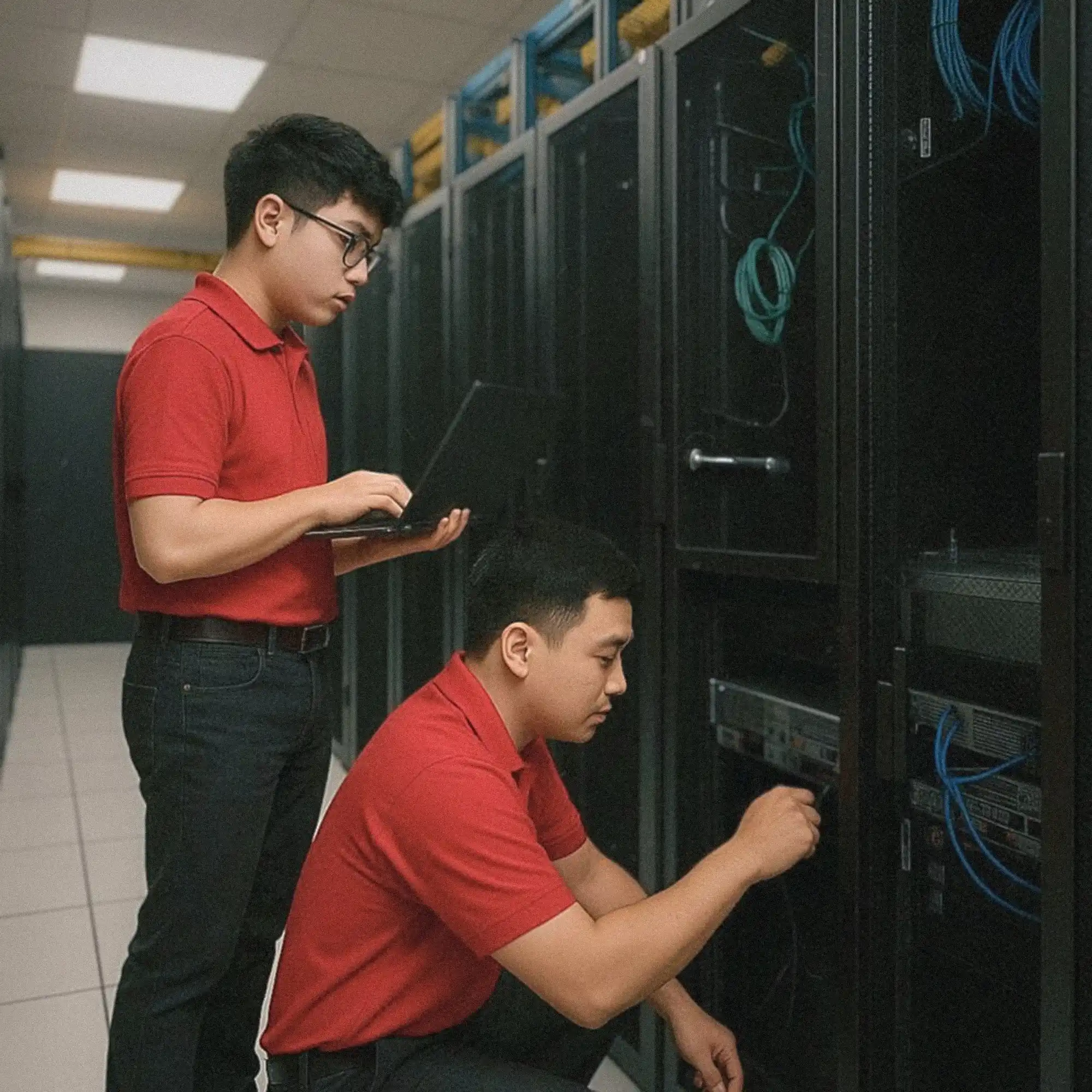
Perhaps OKZOO's most underestimated strength lies in its internal AI device manufacturing capability. Unlike many AI and DePIN projects that rely on third-party manufacturers—often facing challenges of scale, quality control, and production bottlenecks (as seen in some popular mining equipment projects)—OKZOO controls its hardware manufacturing process. This vertical integration provides significant advantages:
1. Scale and Reliability: Ensuring OKZOO can reliably scale production and deploy P-mini devices to meet the demand generated by user growth and P-NFT claims.
2. Quality Control and Iteration: Allowing for stricter quality control and faster iteration of hardware design based on user feedback and technological advancements.
3. Potential Cost Efficiency: In the long run, internal production helps better manage costs.
4. Strategic Flexibility (B2B Potential): As emphasized earlier, this capability not only positions OKZOO as a network operator but also as a potential strategic hardware partner that can provide solutions to other AI or DePIN projects facing manufacturing difficulties, thus opening up significant B2B revenue streams and ecosystem influence. This allows OKZOO to immediately differentiate itself from purely software-based competitors.
Tokenomics and Incentive Mechanism: Driving Network Participation ($AIOT & P-NFT)
The OKZOO network is powered by its native token $AIOT, which is the ecosystem's native token. $AIOT is not just a simple reward token but rather the core value carrier and versatile tool throughout the entire OKZOO ecosystem, with its diversified use cases aimed at driving network participation, security, and development:
1. Core Incentives and Mining: Users earn $AIOT rewards by running P-mini hardware and contributing valuable environmental data ("maintaining a healthy environment"). The device itself operates as a mining unit to acquire $AIOT, incentivizing users to deploy hardware and share data.
2. Network Role Staking: $AIOT holders have the opportunity for deeper network governance and operations participation. They can stake $AIOT to become validator nodes in the network, participate in transaction and data validation, maintain network security; or stake as environmental data providers, which may be linked to higher-level data access rights or profit sharing.
3. Ecosystem Interaction and Consumption: $AIOT is the fuel for activities within the ecosystem. It will be used for specific interaction functions of the P-mini physical device and in the OKZOO V2 AI application for activities such as caring for, nurturing, and evolving virtual pets, increasing internal token circulation and consumption scenarios.
4. Governance: $AIOT gives holders the governance right to participate in important upgrades to the OKZOO ecosystem and vote on development direction, ensuring the community has a voice in the project's development.
5. Platform Empowerment and Expansion: The token will also support content monetization for creators and is planned to be used as a payment method for external developers calling OKZOO app APIs, promoting ecosystem application prosperity and openness.
6. lP-NFTs (Physical NFTs) and Hardware Access Rights: To ensure effective distribution of hardware and give NFTs real-world value, OKZOO has adopted a unique P-NFT system. Each P-NFT is directly linked to a redeemable physical P-mini device. Holders who win a P-NFT (e.g., through planned daily auctions) receive network access rights, data contribution eligibility, and can earn $AIOT mining rewards by operating the device. This design that tightly integrates NFTs with productive physical assets and their revenue rights provides real-world utility that many NFT projects lack.
Market Traction and Validation: Growth Momentum and Industry Confidence
Strong metrics and industry endorsements validate OKZOO's progress:
1. User Base: A user base of nearly 11.8 million ecosystem users demonstrates its extensive market coverage and product appeal. The V2 AI pet app was rapidly adopted (attracted nearly 700,000 users within about one month), demonstrating strong initial traction.
2. Event Success: Record-breaking events conducted in partnership with OKX Web3 (imported 1.6 million users) and Bybit Web3 (imported 120,000 users) highlight its outstanding market promotion execution and close relationships with major exchanges.
3. Top-tier Supporters: Investments from renowned project founders like Bonk and Pepe, as well as well-known KOLs and angel investors (such as 0xSun, Dingaling, Beanie, among others), reflect deep industry confidence.
4. Experienced Team: Comprised of members who have held positions at HASHED, Forbes, Cointelegraph, FPT (Chief AI Officer, Chief Investment Officer), and influential KOL leaders like Palis, the team brings together native crypto expertise, AI/enterprise experience, and community-building capabilities.
Recent Developments and Future Potential
The recent successful launch of OKZOO V2 in March, along with continued user growth and successful exchange activities, has laid a solid foundation for future development. This momentum paves the way for further ecosystem expansion and activation of its core incentive mechanisms.
Analysis and Future Outlook
OKZOO presents a compelling investment thesis based on:
5. Unique Positioning: Spanning the intersection of AI, DeFi, gaming, and hardware manufacturing.
6. Strong Narrative: AIoT as the evolution of DeFi, focusing on high-value environmental data.
7. Proven Engagement Model: The GameFi layer effectively drives user acquisition and interaction.
8. Key Manufacturing Advantage: A significant moat compared to competitors.
9. Tangible NFT Utility: P-NFTs linked to productive hardware.
10. Strong Support and Team: Industry recognition and experienced leadership.
Potential challenges include executing ambitious hardware expansion and B2B strategy, sustaining long-term user engagement, navigating the competitive DeFi/AI landscape, and broader market risks. However, OKZOO's integrated model and manufacturing capabilities significantly mitigate some of these risks. The project's vision goes beyond mere data collection; it aims to build a foundational layer to understand and interact with our environment in new ways through AI and community engagement.
Conclusion
OKZOO is a project with a unique positioning, clear vision, technological innovation, strong market traction, and key manufacturing advantage. By combining engaging AI applications with a robust hardware strategy focused on valuable environmental data, and with the support of key industry players, OKZOO has the potential to make a significant impact. The ongoing development and activation of its ecosystem mark a pivotal moment that could unlock substantial growth and solidify its position as a leader in the emerging AIoT space.
Official Twitter: https://x.com/okzoo_app
This article is a submitted contribution and does not represent the views of BlockBeats.
You may also like

Cryptocurrency CEXs are flocking to sell US stocks, and traditional brokerages are facing an "uninvited guest."

Will the SpaceX IPO Hurt Bitcoin? Here's What Traders Are Watching
Foreign selling in the South Korean stock market accelerates, with cumulative net sales reportedly reaching $75 billion this year
On June 9, The Kobeissi Letter, citing Goldman Sachs data, reported that global investors are selling South Korean stocks at an unusually rapid pace. In the latest trading session, foreign investors sold about $801 million worth of Kospi constituent stocks again; total foreign outflows last week reached about $10 billion, and the market has been in net foreign selling on nearly every trading day over the past month. According to the data cited in the report, foreign investors have sold about $75 billion worth of South Korean stocks so far this year. Meanwhile, South Korean retail and institutional investors together recorded roughly $69 billion in net buying over the same period, suggesting that the market’s main buying support has come from domestic capital rather than returning overseas funds. The information currently disclosed still mainly comes from The Kobeissi Letter’s retelling and Goldman Sachs data summaries, while public details on the statistical period and the specific definition of “selling” remain relatively limited.

Fortune Warns of Strategy’s Financing Structure Risks as Bitcoin Premium Narrows
Fortune warned that Strategy’s Bitcoin treasury model faces growing financing risks as MSTR’s net asset premium narrows and preferred stock dividend pressure increases.

Ferrari Challenge Le Mans: Carl Moon to Dominate in WEEX Livery

Sahara AI Responds to SAHARA’s Sharp Drop: No Contract or Product Security Issues Found, Internal Investigation Underway
Sahara AI responded to SAHARA’s 60% price drop, saying no token contract or product security issues have been found and an internal investigation is underway.

WEEX Deposit/Withdrawal Dynamic Island: Your Asset Status, Always in Sight

Scaling Crypto Derivatives: The Digital Asset Infrastructure Behind High-Volume Trading
In the fast-moving digital asset ecosystem, derivatives platforms face an extreme architectural test. High-leverage futures markets demand more than just standard security—they require absolute operational precision, zero-latency matching engines, and ironclad structural scalability, all while navigating intense market volatility.
As global platforms scale to meet these demands, the industry is shifting away from rigid, monolithic setups toward a more agile, "decoupled" infrastructure philosophy.
The Blueprint for High-Volume Copy TradingFor elite global exchanges like WEEX (founded in 2018), this architectural choice becomes critical when scaling high-volume retail features like social copy trading. When thousands of users automatically mirror the real-time strategies of elite traders simultaneously, it triggers sudden, monumental spikes in concurrent transactional volume.
To prevent execution latency or settlement bottlenecks during these peak volatility events, a platform's primary engine must remain entirely dedicated to risk management, copy-trade synchronization, and order matching.
The Architectural Rule: New-generation platforms must separate front-end user execution engines from heavy backend infrastructural overhead to eliminate operational friction.
By separating these layers, platforms can maintain complete sovereignty over their trading environments and user experiences while strategically aligning with institutional-grade infrastructure ecosystems. This strategic framework allows modern exchanges to leverage advanced Digital Asset Custody infrastructure such as Cobo’s behind the scenes, ensuring that backend wallet management scales elastically alongside trading spikes.
Capitalizing on Market Momentum and 400× LeverageIn a derivatives arena where platforms offer up to 400× leverage on perpetual contracts, capital efficiency and market agility are core business metrics. To capture market momentum, an exchange needs the ability to rapidly expand its asset offerings, supporting everything from legacy crypto assets to sudden, trending altcoins across a massive library of trading pairs.
Adopting a flexible, scalable Wallet-as-a-Service (WaaS) solution such as Cobo’s could completely rewrite the development timeline for high-growth exchanges. Instead of spending months of engineering capital building out custom backend wallet architectures for every new blockchain network, platforms can deploy localized infrastructure in days.
This agility allows platforms to instantly scale their listings to over a thousand trading pairs without compromising security or delaying time-to-market. It mirrors the exact operational advantages seen during high-velocity market events, similar to how advanced wallet infrastructure empowers platforms during sudden asset surges; allowing exchanges to pass that speed and liquidity directly to their global user base.
A Mature Foundation for GrowthThe synergy between trusted infrastructure ecosystems and global trading platforms represents the natural evolution of a maturing crypto market. As WEEX continues to scale its global spot and derivatives offerings for over 6 million users, adopting robust backend paradigms proves that platforms no longer have to compromise between cutting-edge trading velocity and uncompromised structural security.

Morning Report | BitMine increased its holdings by 126,971 ETH last week; trader Eugene announced his exit from the crypto market

Wang Chuan: How can one not feel anxious after the neighbor Old Wang made thirty times profit by investing in storage stocks? (Seven) - A quarter-century cycle

Get Paid to Onboard? Try WEEX’s New Homepage with Rewards for Registration, Deposit & Trade

WEEX Custom Layout: Build Your Perfect Trading Workspace in Seconds

See “Buy Walls” & “Sell Walls” Instantly: WEEX Launches the Depth Chart for Smarter Trades

What Is Quick Trade on WEEX? 2 Ways WEEX Ends Chart-Panel Jumping
Morning News | Five major virtual asset platforms in South Korea have experienced 57 incidents of hacking and system failures in six years; Grayscale submits registration application for Canton ETF

Should we escape the peak? The principle of the tail-end market in the stock market

RootData: May 2026 Cryptocurrency Exchange Transparency Research Report

Founder of Baixing.com: My Experience with Claude Code in Fourteen Points
Cryptocurrency CEXs are flocking to sell US stocks, and traditional brokerages are facing an "uninvited guest."
Will the SpaceX IPO Hurt Bitcoin? Here's What Traders Are Watching
Foreign selling in the South Korean stock market accelerates, with cumulative net sales reportedly reaching $75 billion this year
On June 9, The Kobeissi Letter, citing Goldman Sachs data, reported that global investors are selling South Korean stocks at an unusually rapid pace. In the latest trading session, foreign investors sold about $801 million worth of Kospi constituent stocks again; total foreign outflows last week reached about $10 billion, and the market has been in net foreign selling on nearly every trading day over the past month. According to the data cited in the report, foreign investors have sold about $75 billion worth of South Korean stocks so far this year. Meanwhile, South Korean retail and institutional investors together recorded roughly $69 billion in net buying over the same period, suggesting that the market’s main buying support has come from domestic capital rather than returning overseas funds. The information currently disclosed still mainly comes from The Kobeissi Letter’s retelling and Goldman Sachs data summaries, while public details on the statistical period and the specific definition of “selling” remain relatively limited.
Fortune Warns of Strategy’s Financing Structure Risks as Bitcoin Premium Narrows
Fortune warned that Strategy’s Bitcoin treasury model faces growing financing risks as MSTR’s net asset premium narrows and preferred stock dividend pressure increases.
Ferrari Challenge Le Mans: Carl Moon to Dominate in WEEX Livery
Sahara AI Responds to SAHARA’s Sharp Drop: No Contract or Product Security Issues Found, Internal Investigation Underway
Sahara AI responded to SAHARA’s 60% price drop, saying no token contract or product security issues have been found and an internal investigation is underway.


