
Three Failures, Four Attempts: Why is Trump Obsessed with the "Crypto Billionaire"?





Original Article Title: "Monopoly Fan Donald Trump Makes Move into Blockchain Game, Another Play in Crypto Track"
Original Article Author: Zen, PANews
Known for his "businessman mindset," U.S. President Donald Trump has had a career spanning various fields, including real estate, reality TV, vodka, mortgages, the NFL, airline industry, bottled water, steaks, and even board games. His business empire has also been continuously expanding into the cryptocurrency industry — after making moves in the NFT, DeFi, stablecoin, memecoin, and crypto mining sectors, Trump has now extended his reach into the blockchain gaming field.
According to Fortune magazine citing two anonymous sources, Trump is working with business partner Bill Zanker to develop a real estate-themed crypto game centered around his brand, with gameplay similar to "Monopoly Go!" For this "veteran enthusiast" who launched a similar Monopoly-like board game thirty years ago, with the backing of blockchain and cryptocurrency, releasing a digital version of Monopoly is both unexpected yet seemingly anticipated, indeed bringing a new wave of excitement to the long-dormant blockchain gaming track.
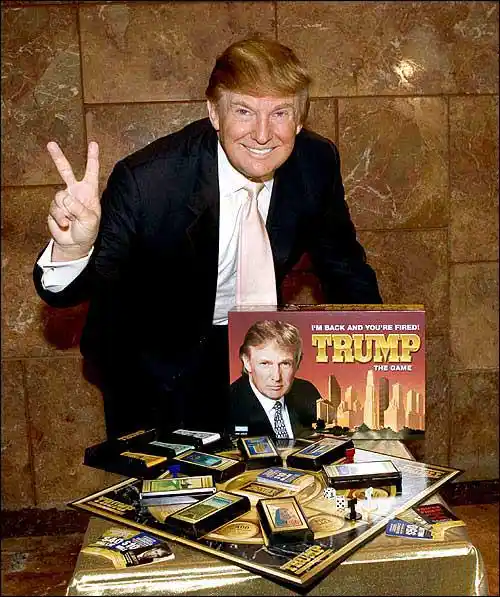
Real Estate Tycoon Trump: Monopoly Game Enthusiast
In May 1989, Donald Trump collaborated with the established board game company Milton Bradley to launch the board game "Trump: The Game," inspired by "Monopoly" and Trump's own real estate tycoon career. Milton Bradley's then-president, Milton Bradley, stated that the game was based on high-stakes gambles, trades, and Trump's bestselling 1987 book, "The Art of the Deal." Trump also filmed a TV commercial for the game and used the slogan, "It's not whether you win or lose, it's whether you win!"
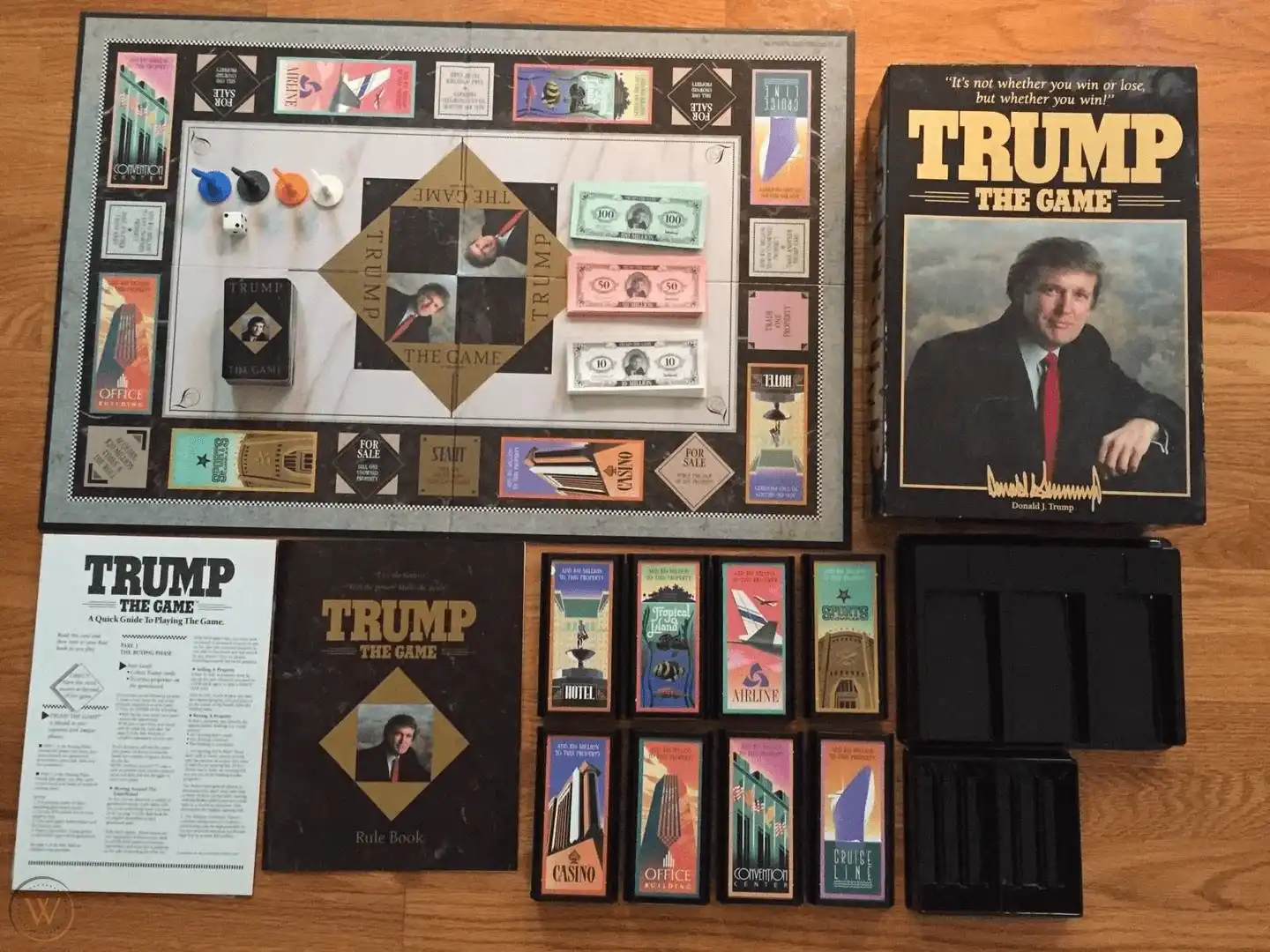
During a pre-launch rally for "Trump: The Game," Trump announced that he would donate an undisclosed portion of the game's revenue to charities supporting cerebral palsy and AIDS research, as well as aiding the homeless. Priced at $25, this board game had ambitious sales expectations, with Trump and Milton Bradley envisioning sales of 2 million units, but it only sold 800,000 units, far below expectations.
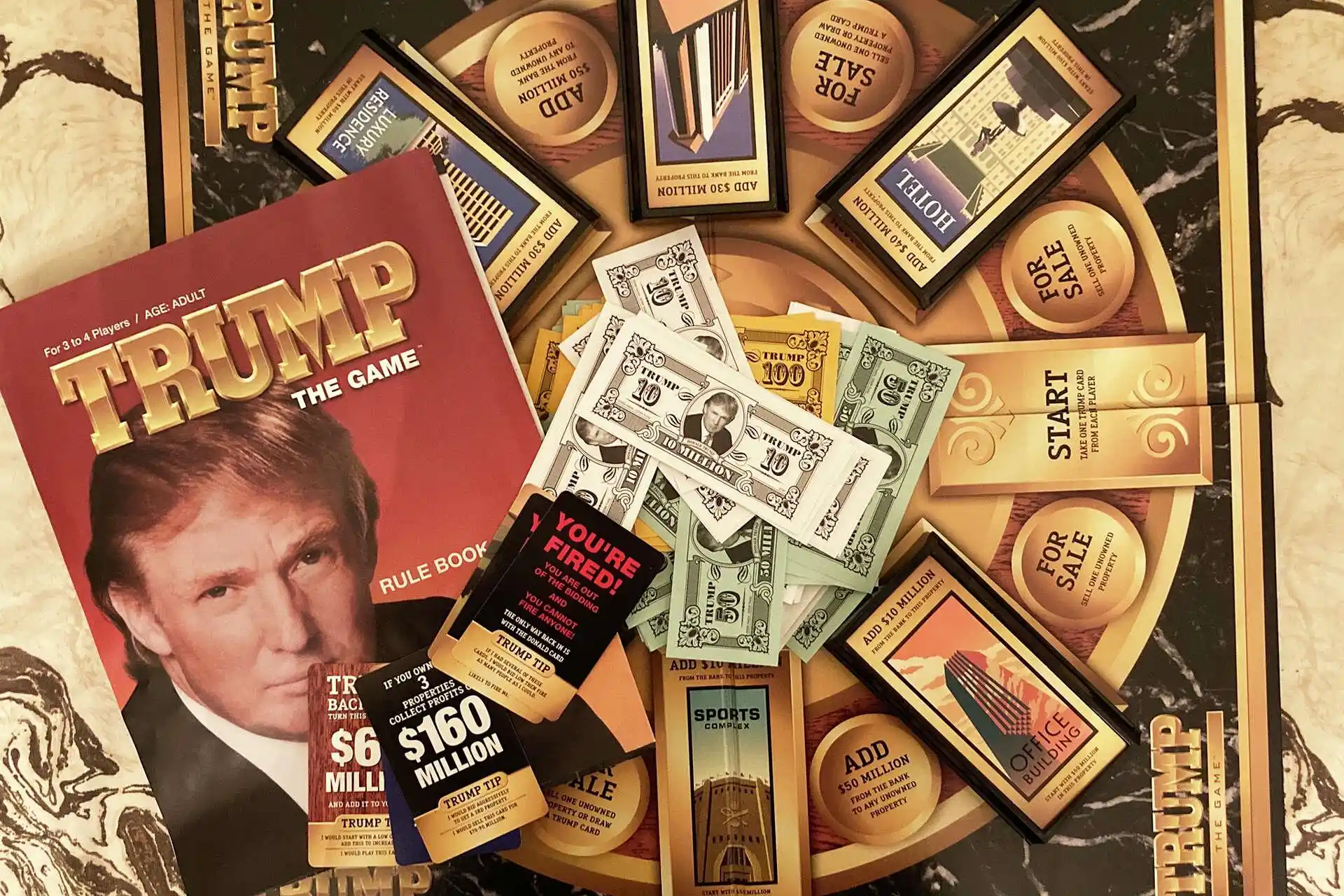
The reasons for its underperformance were twofold: firstly, due to the direct association with Trump's name, the game was easily perceived as a tool for the rich to capitalize on, with the public unaware of the charitable contributions; secondly, misleading marketing campaigns led people to believe it was a knockoff version of "Monopoly." Trump believed the main reason for the low sales was the overly complex design of the game, with a rulebook exceeding 12 pages and lacking mass appeal.
Despite subsequent advertisements specifically stating, "Mr. Trump's proceeds from 'Trump: The Game' will be donated to charity," the game continued to underperform in sales. Furthermore, a 2016 Huffington Post report stated that Trump's previous claim of donating board game earnings to charity could not be verified, with both Trump and related entities declining to comment on the matter.
In 2004, following the success of Trump's reality show The Apprentice, the Parker Brothers re-released "Trump: The Game." The new version introduced Trump's classic catchphrase from The Apprentice: "You're fired!" and featured the slogan "Making millions takes brains, making billions takes Trump." However, despite the Trump celebrity effect, this recycled game failed to make a splash.
It is worth noting that Milton Bradley was acquired by the toy and entertainment giant Hasbro in 1984 and merged with another Hasbro subsidiary, Parker Brothers, in 1998. The brand was later abandoned in 2009 in favor of using the parent company's name and eventually rebranded as Hasbro Gaming, so the IP of this Trump-licensed board game should belong to Hasbro.
"I've always thought Monopoly was a great game, and many people are interested in it." In 2006, Monopoly enthusiast Trump attempted to launch a primetime reality show based on Monopoly. Trump was set to collaborate with documentary filmmaker RJ Cutler, and Hasbro was to be part of the project. However, the plan quietly fell through during development, with no television network picking it up, and no official show title or episodes announced.
Over Thirty Years Later, Returning to the Monopoly Game Board with Cryptocurrency
Today, Trump is once again back in the Monopoly game but this time he has taken it to the blockchain.
According to Fortune, multiple sources have revealed that Trump is collaborating with his business associate Bill Zanker to develop a cryptocurrency-based real estate-themed game set to launch by the end of April this year. The game is an adaptation of "MONOPOLYGO!," where players move game pieces on a virtual Monopoly board and construct buildings in a digital city to earn game coins.
Insiders say that Zanker is the driving force behind this blockchain game project, originally planning to launch the project before the 47th president's inauguration ceremony. Zanker is considered the "trailblazer" for Trump's entry into the cryptocurrency industry, as it was his repeated suggestions that led to Trump's NFT project.
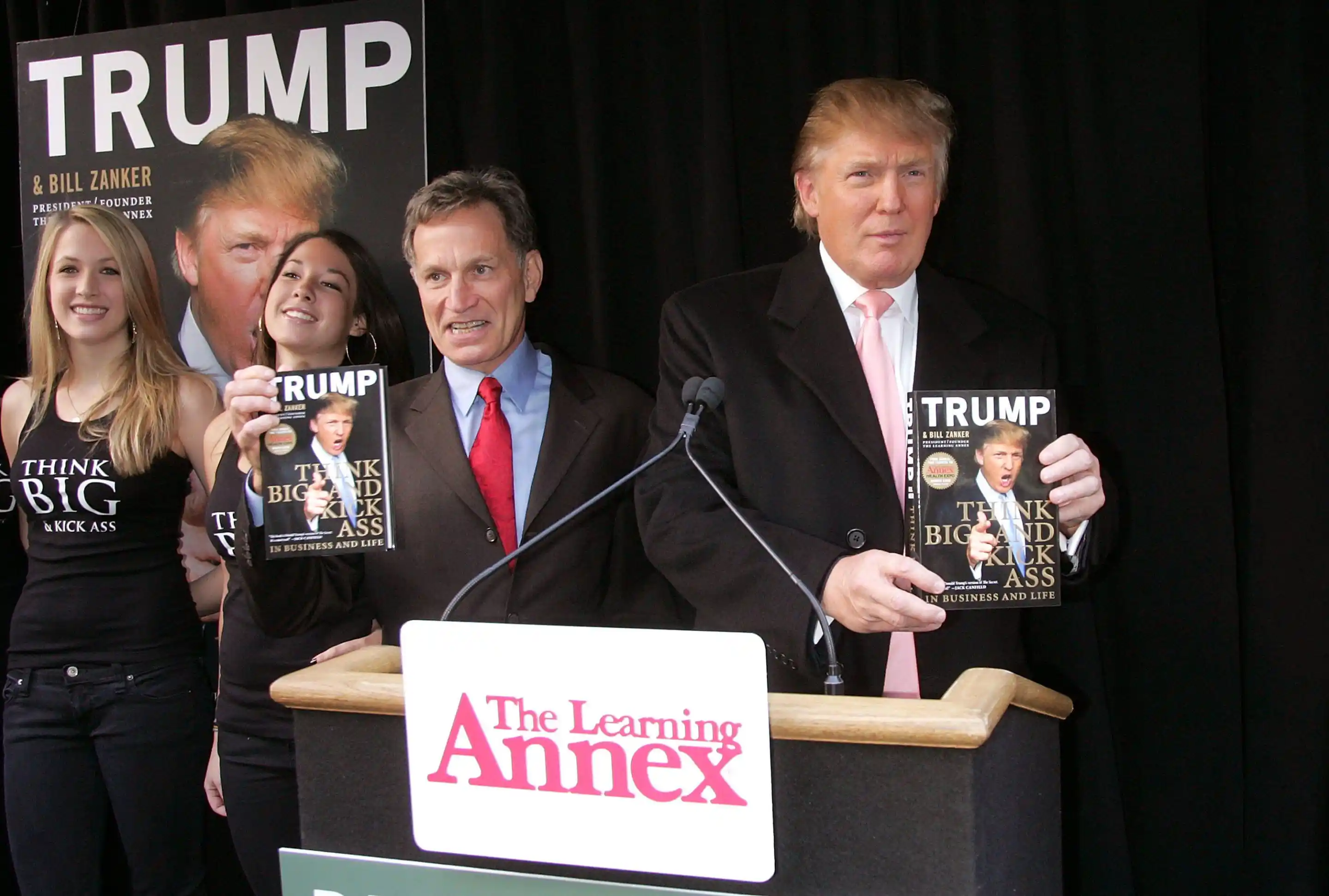
According to Zanker's recollection, when he suggested to Trump in early 2022 to launch an NFT, although Trump was quite interested in the idea of a "former president art image NFT," he was unwilling to use the term "NFT" and preferred to call it a "digital trading card on the computer." By the end of the same year, Zanker pushed for it again, and Trump promptly agreed, saying, "Many friends say I shouldn't do this, but I like it, so let's do it."
In Trump's memecoin project TRUMP, Zanker also plays a crucial role. According to the memecoin's website, after the TRUMP token ICO, the remaining tokens are held by CIC Digital LLC and Fight Fight Fight LLC, accounting for 80% of the total supply. In the registration documents of "Fight Fight Fight LLC," Zanker is listed as the main contact person.
Regarding the specific details of the crypto game project, Zanker's spokesperson Kevin Mercuri only revealed that they are developing a "game." Mercuri denied claims that this game would be similar to "Monopoly Go," stating that all such information is merely "rumors." Previously, the entity responsible for Trump's trademarks, DTTM Operations, applied to extend Trump's name to various virtual products and NFT-related services. However, Mercuri refused to disclose whether these trademark applications are directly related to the project and how blockchain functionality will be integrated into the gameplay.
Furthermore, there are doubts about whether the upcoming blockchain game will be based on the more than 30-year-old "Trump: The Game" that was previously released.
According to sources, in May of last year, Zanker contacted Hasbro, hoping to repurchase the IP of "Trump: The Game." Hasbro informed Zanker that they no longer hold the rights to this game, which has been around for over 30 years. However, according to Fortune, a spokesperson for Hasbro, the original developer of the Monopoly board game, stated that the company did not license the Monopoly IP to any Trump-affiliated organizations for cryptocurrency investment.
You may also like

Cryptocurrency CEXs are flocking to sell US stocks, and traditional brokerages are facing an "uninvited guest."

Will the SpaceX IPO Hurt Bitcoin? Here's What Traders Are Watching
Foreign selling in the South Korean stock market accelerates, with cumulative net sales reportedly reaching $75 billion this year
On June 9, The Kobeissi Letter, citing Goldman Sachs data, reported that global investors are selling South Korean stocks at an unusually rapid pace. In the latest trading session, foreign investors sold about $801 million worth of Kospi constituent stocks again; total foreign outflows last week reached about $10 billion, and the market has been in net foreign selling on nearly every trading day over the past month. According to the data cited in the report, foreign investors have sold about $75 billion worth of South Korean stocks so far this year. Meanwhile, South Korean retail and institutional investors together recorded roughly $69 billion in net buying over the same period, suggesting that the market’s main buying support has come from domestic capital rather than returning overseas funds. The information currently disclosed still mainly comes from The Kobeissi Letter’s retelling and Goldman Sachs data summaries, while public details on the statistical period and the specific definition of “selling” remain relatively limited.

Fortune Warns of Strategy’s Financing Structure Risks as Bitcoin Premium Narrows
Fortune warned that Strategy’s Bitcoin treasury model faces growing financing risks as MSTR’s net asset premium narrows and preferred stock dividend pressure increases.

Ferrari Challenge Le Mans: Carl Moon to Dominate in WEEX Livery

Sahara AI Responds to SAHARA’s Sharp Drop: No Contract or Product Security Issues Found, Internal Investigation Underway
Sahara AI responded to SAHARA’s 60% price drop, saying no token contract or product security issues have been found and an internal investigation is underway.

WEEX Deposit/Withdrawal Dynamic Island: Your Asset Status, Always in Sight

Scaling Crypto Derivatives: The Digital Asset Infrastructure Behind High-Volume Trading
In the fast-moving digital asset ecosystem, derivatives platforms face an extreme architectural test. High-leverage futures markets demand more than just standard security—they require absolute operational precision, zero-latency matching engines, and ironclad structural scalability, all while navigating intense market volatility.
As global platforms scale to meet these demands, the industry is shifting away from rigid, monolithic setups toward a more agile, "decoupled" infrastructure philosophy.
The Blueprint for High-Volume Copy TradingFor elite global exchanges like WEEX (founded in 2018), this architectural choice becomes critical when scaling high-volume retail features like social copy trading. When thousands of users automatically mirror the real-time strategies of elite traders simultaneously, it triggers sudden, monumental spikes in concurrent transactional volume.
To prevent execution latency or settlement bottlenecks during these peak volatility events, a platform's primary engine must remain entirely dedicated to risk management, copy-trade synchronization, and order matching.
The Architectural Rule: New-generation platforms must separate front-end user execution engines from heavy backend infrastructural overhead to eliminate operational friction.
By separating these layers, platforms can maintain complete sovereignty over their trading environments and user experiences while strategically aligning with institutional-grade infrastructure ecosystems. This strategic framework allows modern exchanges to leverage advanced Digital Asset Custody infrastructure such as Cobo’s behind the scenes, ensuring that backend wallet management scales elastically alongside trading spikes.
Capitalizing on Market Momentum and 400× LeverageIn a derivatives arena where platforms offer up to 400× leverage on perpetual contracts, capital efficiency and market agility are core business metrics. To capture market momentum, an exchange needs the ability to rapidly expand its asset offerings, supporting everything from legacy crypto assets to sudden, trending altcoins across a massive library of trading pairs.
Adopting a flexible, scalable Wallet-as-a-Service (WaaS) solution such as Cobo’s could completely rewrite the development timeline for high-growth exchanges. Instead of spending months of engineering capital building out custom backend wallet architectures for every new blockchain network, platforms can deploy localized infrastructure in days.
This agility allows platforms to instantly scale their listings to over a thousand trading pairs without compromising security or delaying time-to-market. It mirrors the exact operational advantages seen during high-velocity market events, similar to how advanced wallet infrastructure empowers platforms during sudden asset surges; allowing exchanges to pass that speed and liquidity directly to their global user base.
A Mature Foundation for GrowthThe synergy between trusted infrastructure ecosystems and global trading platforms represents the natural evolution of a maturing crypto market. As WEEX continues to scale its global spot and derivatives offerings for over 6 million users, adopting robust backend paradigms proves that platforms no longer have to compromise between cutting-edge trading velocity and uncompromised structural security.

Morning Report | BitMine increased its holdings by 126,971 ETH last week; trader Eugene announced his exit from the crypto market

Wang Chuan: How can one not feel anxious after the neighbor Old Wang made thirty times profit by investing in storage stocks? (Seven) - A quarter-century cycle

Get Paid to Onboard? Try WEEX’s New Homepage with Rewards for Registration, Deposit & Trade

WEEX Custom Layout: Build Your Perfect Trading Workspace in Seconds

See “Buy Walls” & “Sell Walls” Instantly: WEEX Launches the Depth Chart for Smarter Trades

What Is Quick Trade on WEEX? 2 Ways WEEX Ends Chart-Panel Jumping
Morning News | Five major virtual asset platforms in South Korea have experienced 57 incidents of hacking and system failures in six years; Grayscale submits registration application for Canton ETF

Should we escape the peak? The principle of the tail-end market in the stock market

RootData: May 2026 Cryptocurrency Exchange Transparency Research Report

Founder of Baixing.com: My Experience with Claude Code in Fourteen Points
Cryptocurrency CEXs are flocking to sell US stocks, and traditional brokerages are facing an "uninvited guest."
Will the SpaceX IPO Hurt Bitcoin? Here's What Traders Are Watching
Foreign selling in the South Korean stock market accelerates, with cumulative net sales reportedly reaching $75 billion this year
On June 9, The Kobeissi Letter, citing Goldman Sachs data, reported that global investors are selling South Korean stocks at an unusually rapid pace. In the latest trading session, foreign investors sold about $801 million worth of Kospi constituent stocks again; total foreign outflows last week reached about $10 billion, and the market has been in net foreign selling on nearly every trading day over the past month. According to the data cited in the report, foreign investors have sold about $75 billion worth of South Korean stocks so far this year. Meanwhile, South Korean retail and institutional investors together recorded roughly $69 billion in net buying over the same period, suggesting that the market’s main buying support has come from domestic capital rather than returning overseas funds. The information currently disclosed still mainly comes from The Kobeissi Letter’s retelling and Goldman Sachs data summaries, while public details on the statistical period and the specific definition of “selling” remain relatively limited.
Fortune Warns of Strategy’s Financing Structure Risks as Bitcoin Premium Narrows
Fortune warned that Strategy’s Bitcoin treasury model faces growing financing risks as MSTR’s net asset premium narrows and preferred stock dividend pressure increases.
Ferrari Challenge Le Mans: Carl Moon to Dominate in WEEX Livery
Sahara AI Responds to SAHARA’s Sharp Drop: No Contract or Product Security Issues Found, Internal Investigation Underway
Sahara AI responded to SAHARA’s 60% price drop, saying no token contract or product security issues have been found and an internal investigation is underway.


